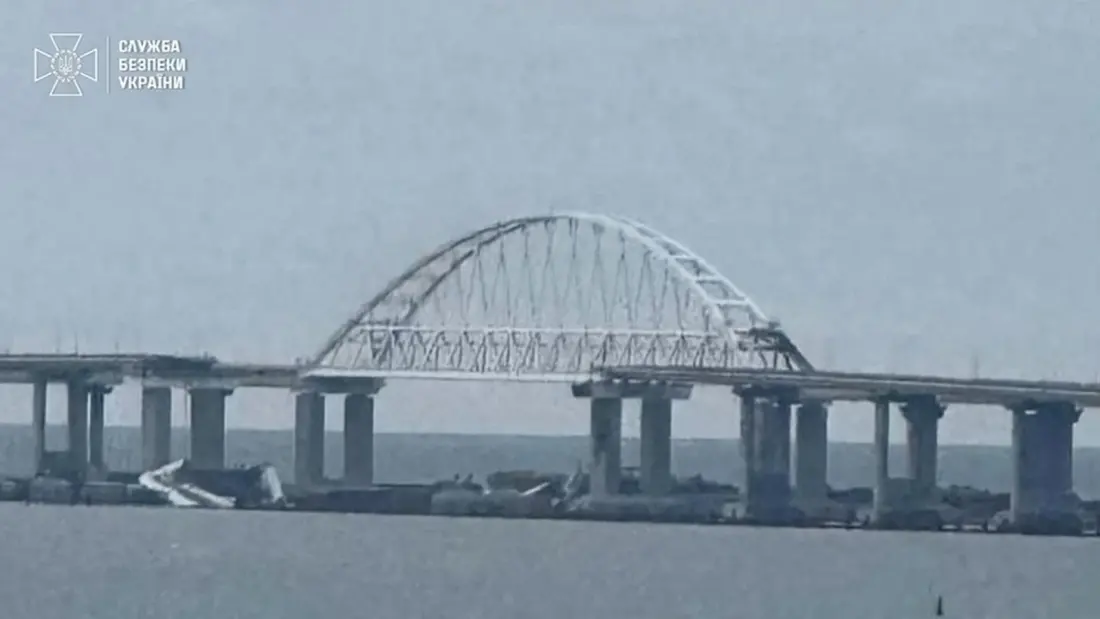
Ukraine has destroyed part of the road section of the 19-kilometre bridge linking Russia to annexed Crimea — its third attack on the span in a single week — and the damage is rippling far beyond one piece of infrastructure. A Thursday strike also suspended rail traffic across the bridge, which Moscow built after seizing the peninsula in 2014 and has repeatedly hailed as a flagship project.
Analysts and Ukrainian commanders told Reuters the strikes matter less for the bridge itself and more for the mounting pressure on Russia's logistics as a whole. With the road section out of action, Russian traffic is being pushed onto the M-14 highway through occupied southern Ukraine — an artery Kyiv has been pounding for months with medium-range drones capable of flying 30 to 180 kilometres. As Vienna-based analyst Franz-Stefan Gady put it: more traffic means more targets.
The bridge attack also came just ahead of a rare three-way meeting between Vladimir Putin, Donald Trump and Xi Jinping, giving it obvious symbolic weight. Putin, for his part, claimed the crossing was used only for civilian purposes and promised retaliation. Overnight, Russian ballistic missiles damaged three bridges across the Dnipro River in Kyiv.
The campaign to isolate Crimea has been building all year. Ukrainian forces spent the summer hitting fuel tankers serving the peninsula, causing shortages, and striking energy infrastructure there. Since 2022, Kyiv has attacked the bridge with a truck bomb, sea drones and underwater explosives. Within its sector alone, Ukraine's Azov grouping says it has struck around 100 locomotives and destroyed 600 metric tons of fuel in recent months — figures Reuters could not verify. Analysts note Russia is unlikely to suffer a sudden collapse; it disperses convoys and moves at night, and rain and cloud currently favour it. But strikes on smaller bridges, including several over the Mius River inside Russia, could create fresh bottlenecks and a slow cat-and-mouse of repairs.
Why should a travel reader care? Because this is a war unfolding across terrain many Europeans once visited freely — Crimea's Black Sea coast and the Sea of Azov ports — and the fighting is now shaping how and whether those places can ever return to normal tourism. The region remains firmly off-limits: Ukraine's travel advice, and that of most Western governments, prohibits or strongly discourages all travel to occupied Crimea and the front-line south and east, where drone and missile strikes on roads, bridges and fuel depots are now near-daily events. Even cities like Kyiv face periodic strikes on critical infrastructure. For anyone with family roots, old travel memories or future plans in the region, the honest takeaway is simple: there is no safe way in, and the map of closed airspace and no-go zones around the Black Sea keeps expanding, not shrinking. Watch this story for what it signals about how long the war lasts — and how long the region stays closed.