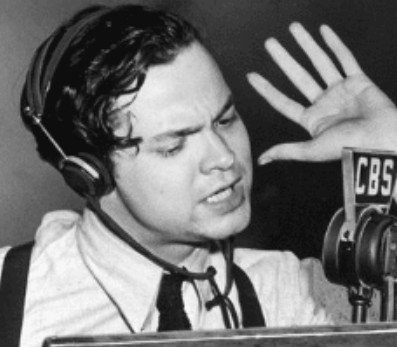
Most people know Orson Welles' 1938 War of the Worlds broadcast panicked America. Far fewer know the Ecuadorian remake eleven years later — which ended with a radio station burned to the ground and at least six people dead.
On the night of 12 February 1949, Radio Quito interrupted a live concert to announce that an enormous cylinder had crashed near Cotocollao, a village north of the capital. One of the city's best-known broadcasters, Leonardo Páez — a poet, playwright and composer who wrote songs still played at festivals today — was rushed to the scene to report "live." Listeners heard a green arm emerge from the alien craft before a death-ray seemingly vaporised him mid-broadcast. The station patched in other "reporters," and an actor posing as Quito's archbishop stoked the hysteria further.
The production was convincing enough to fool the authorities themselves. With President Galo Plaza Lasso out of town, police, firefighters and even the Red Cross were dispatched to confront the invaders. By the time the station admitted it was fiction, the crowd was furious. A mob surrounded the downtown building that housed both Radio Quito and El Comercio newspaper and set it alight. Announcer Luis Beltrán could be heard begging to let firefighters through — they couldn't, partly because much of the security force was still out in Cotocollao chasing Martians. Six people died, including the station's pianist and violinist, and Páez's girlfriend was killed in the blaze.
The script's lineage is a curiosity in itself. A former writer for The Shadow, William Steele, had adapted it for Chile in 1944, where a version of the broadcast reportedly triggered a fatal heart attack in Valparaíso. Actor Eduardo Alcaraz then carried that script to Quito. The aftermath: Alcaraz fled to Mexico, while Páez hid for three months before being exonerated — his daughter Ximena insists he never concealed that it was a play, and blames station owners for scapegoating him. He worked another six years in Ecuador, moved to Mérida, Venezuela in 1955, and died in 1991 with an unfinished poem in his typewriter.
For travellers, the story is a wild footnote to a city most visitors know for its colonial centre. Quito's Old Town — the first UNESCO World Heritage Site — sits at 2,850 metres, and landmarks like the gold-drenched Compañía de Jesús church are reason enough to visit. Knowing this tale adds texture to a stroll through the historic centre, where the fire that followed the Martians' "landing" once burned.