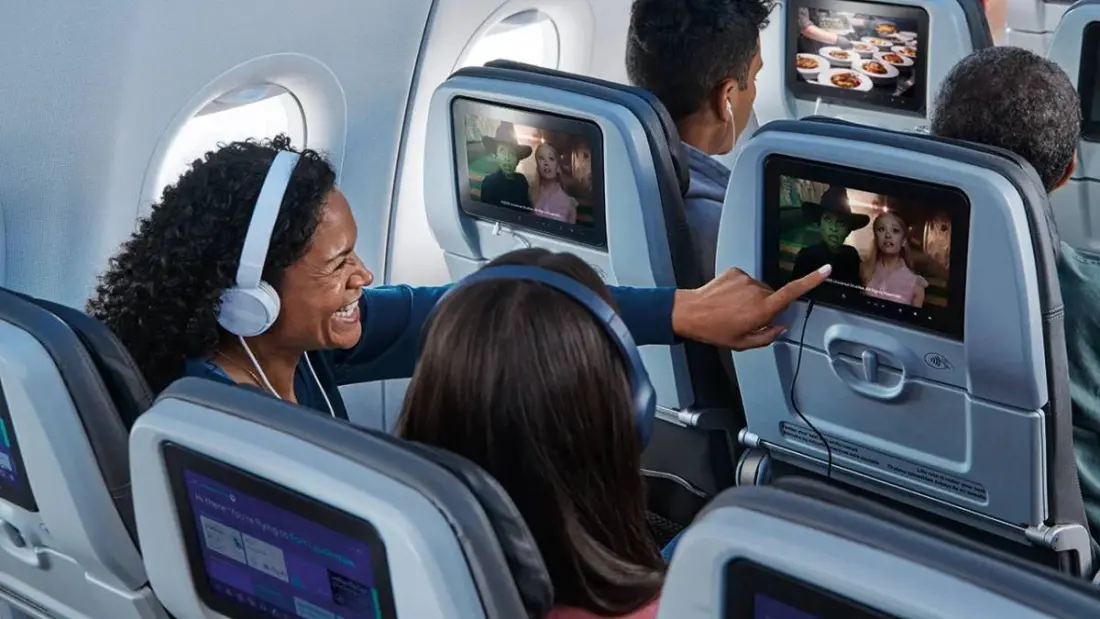
Same Airbus A320, same route, wildly different cabin. That's the reality of flying domestic US economy right now: seat pitch on standard fares ranges from about 32 inches on the roomiest carrier down to 28 inches at the tightest — a difference of more than 10 cm on identical hardware.
JetBlue currently tops the rankings, with an average of 32.3 inches of pitch across its core fleet, well above the domestic average of roughly 30 inches, plus 18.4-inch-wide seats and seatback screens at every seat. Delta and Alaska follow at 31 inches, with American and United close behind at around 30 inches. At the bottom sits Frontier, whose 28-inch pitch only works because ultra-slim, non-reclining seats shift padding and literature pockets away from knee level.
The big change coming: JetBlue will cut standard economy pitch to 30 inches across its non-Mint fleet to make space for BlueFirst, a dedicated domestic first-class cabin launching revenue flights on December 8, 2026. The US legroom leader is effectively moving toward the pack — and toward ultra-low-cost territory.
Why does this keep happening? Money. Slimline seat engineering now lets carriers trim an inch or two of pitch without eating much knee clearance, so dropping a single inch across a 200-strong A321 fleet can add roughly 1,200 seats a day at almost no extra fuel or crew cost. Just as importantly, compressing standard rows creates space for premium sections — Delta Comfort+, American Main Cabin Extra, United Economy Plus — sold at 30-50% markups over standard fares. The 33-34 inches of legroom that used to be standard on domestic flights is now an upsell, or something you unlock through loyalty status.
The result is a two-tier economy: a bare-bones baseline pitched at price-sensitive travellers, and an extra-legroom tier marketed at business flyers and anyone dreading a four-hour flight with their knees against the seatback. The gap between low-cost and full-service carriers is narrowing, so the airline name matters less than it used to — check the seat map and pitch figures for your specific flight before booking, not just the fare.
There could be a limit to the squeeze. Consumer groups periodically press the FAA to set minimum seat dimensions on safety and evacuation grounds, while airlines argue cabin layout should be decided by the market. For now, though, legroom rankings reflect revenue strategy, not engineering limits — and the only real lever travellers have is where they choose to spend their money.