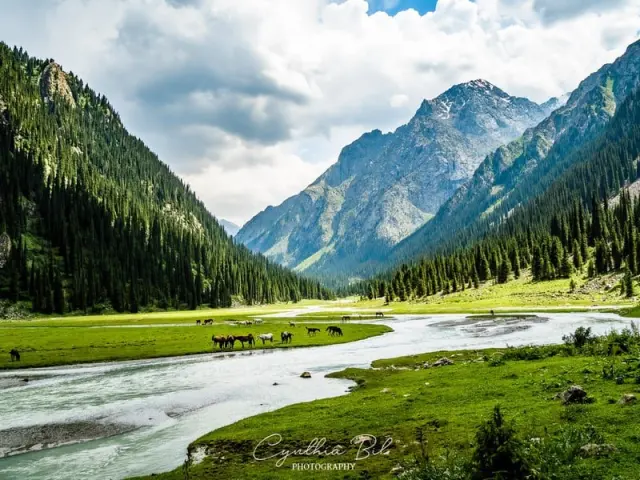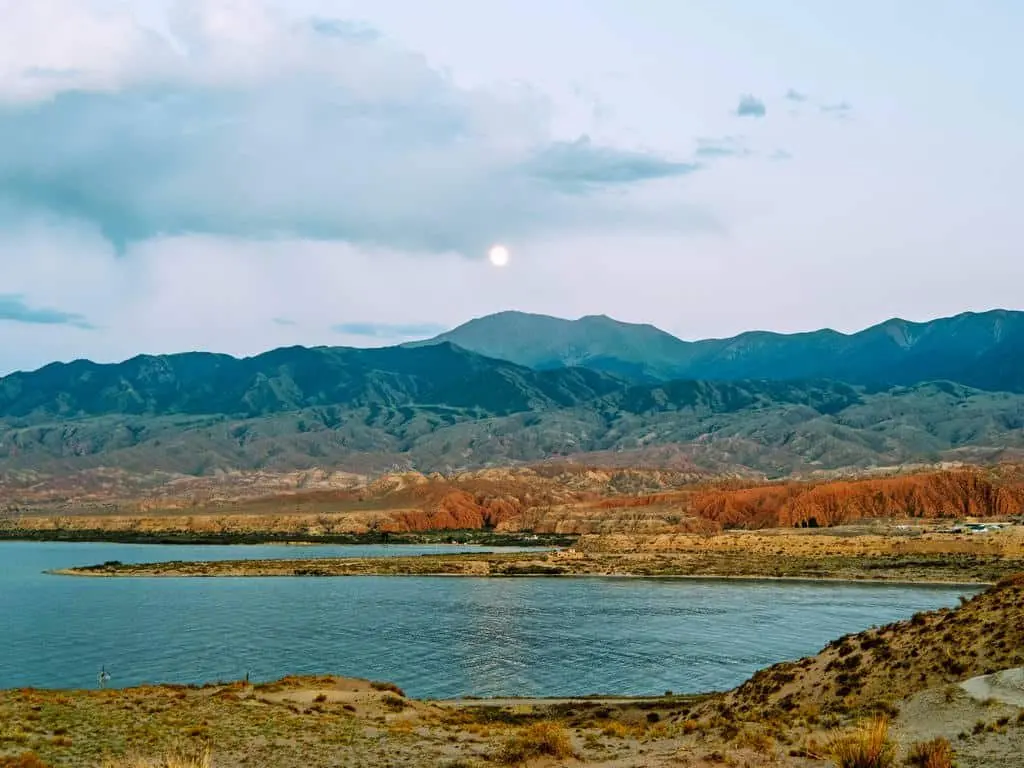
Most travellers cross Kyrgyzstan's Issyk Kul en route to trekking hubs like Karakol, treating the world's second-largest alpine lake as scenery from a bus window. That's a mistake worth correcting. At 1,607 metres above sea level and stretching over 180 kilometres end to end, ringed by the snow-dusted Terskey and Kungey Ala-Too ranges, this lake packs beaches, canyons, petroglyphs and yurt camps into a single loop that works beautifully as a one-week itinerary.
The name means Warm Lake, and it's literal — its salty mineral water never freezes, holding summer heat well into winter. Locals from Bishkek and Almaty have long used its sandy north shore as a summer escape, which is why the resort towns there carry the nickname Kyrgyz Riviera.
The north shore is the easy-entry side: four to five hours from Bishkek on a decent road, with Cholpon-Ata as the practical base. Mornings here can be spent among Bronze-Age carvings at the open-air petroglyph museum — go early or late when shadows sharpen the ibex and hunter figures — before heading inland. Grigorievka and Semenovka gorges form a classic loop: pine forest, marmot-whistle silence, two alpine lakes at the top of Grigorievka, and herders who'll often wave you into a yurt for tea and bread. Further along, the Chok-Tal valley hides one of the region's underrated treks, the Seven Lakes Loop — an 11-kilometre circuit where six ponds are an easy walk but the seventh demands a steep scree scramble, and much of the route sits above 3,000 metres, so mind the altitude. Quieter villages like Tamchy and Korumdu offer guesthouses and empty beach without the resort crowds.
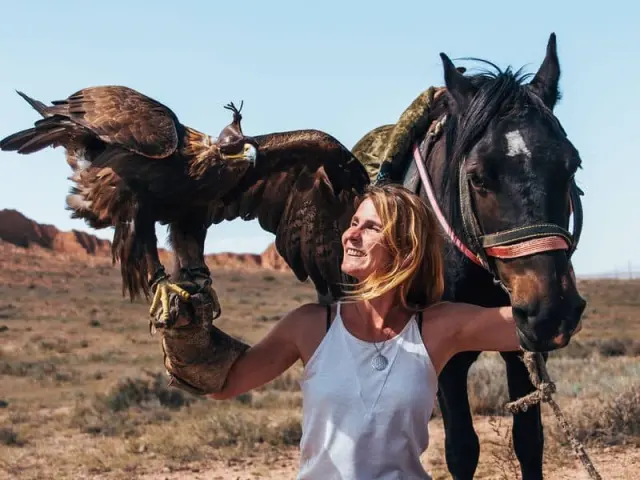
The south shore flips the mood entirely: fewer beaches, more culture and wilder country. Bokonbaevo is the hub, where you can watch eagle-hunting demonstrations, learn felt-rug making, or visit nearby Kyzyl-Tuu to see craftsmen bending yurt poles over open fires. Just outside town, the Shatyly Panorama trail is a gentle 3.5-kilometre loop to a hilltop worth claiming before sunrise. Fourteen kilometres west, the Ak-Say petroglyphs pair Tibetan-Buddhist carvings with odd Soviet-era graffiti on a red ridge above the water. And between Bokonbaevo and Tosor sit the sandstone towers of Skazka Canyon, sculpted into shapes that shift colour through the day.
The charm of Issyk Kul is the density of it all: swim in the morning, gain a ridge by afternoon, sleep in a yurt under stars. It suits independent travellers comfortable with rough roads — public transport skips much of the region, so renting a 4WD or hiring local drivers (CBT offices in Tamchy and Bokonbaevo can help) is the way to go. Come between roughly June and September for warm water and accessible passes, with late summer turning the southern hillsides honey-coloured.