A Qantas flight from Italy to Australia was recently grounded for a deep clean after a bedbug outbreak on board, while in England, Southeastern trains out of the West Marina depot near Hastings were pulled from service in October over an infestation. The message for anyone travelling this season is clear: the tiny bloodsuckers are on the move, and your suitcase is their favourite ride.
It's not a small problem. Cases are climbing by roughly 20 per cent a year in London and other major European cities, according to monitoring firm Valpas, which found bedbugs in one in every 42 hotel rooms it observed. Experts blame frequent travel and growing insecticide resistance. And crucially, this has nothing to do with cleanliness — as pest management specialist Dr Cassie Krejci puts it, bedbugs are a problem for all travellers in all destinations, five-star suites included.
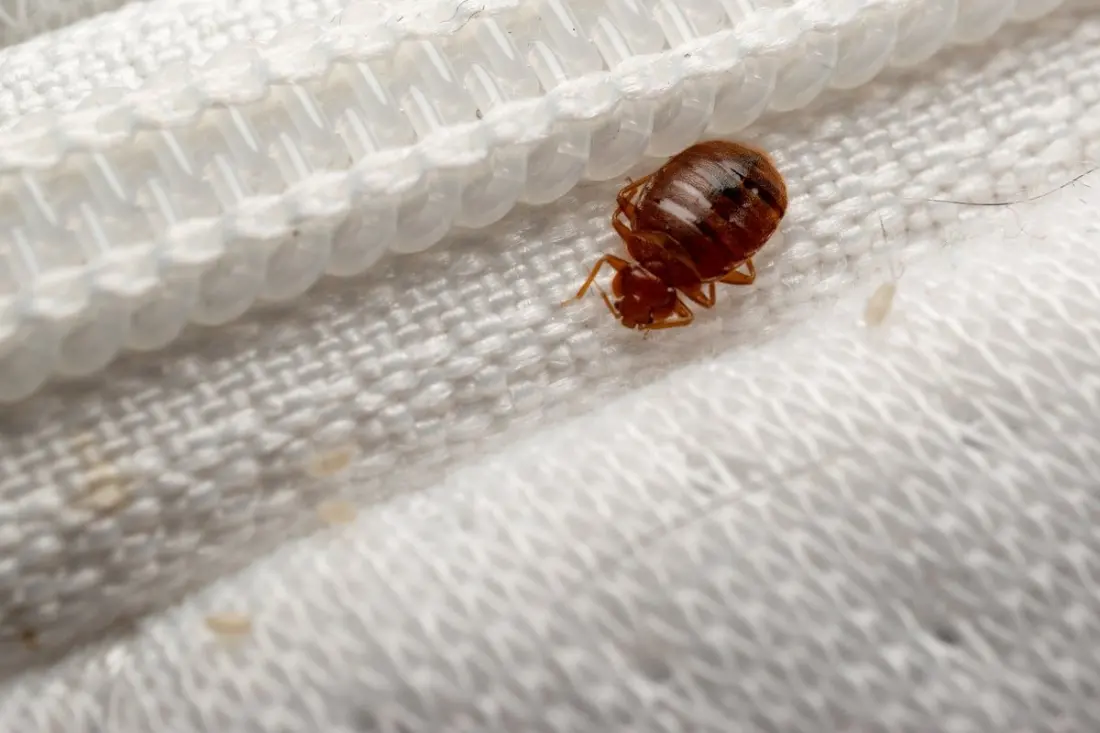
So what are you looking for? Bedbugs are small, wingless insects, dark yellow, red or brown, with flat oval bodies. They bite exposed skin — head, arms, legs — usually leaving itchy red bumps in a zig-zag line, though they're not known to cause serious health issues.
The smart move is a two-minute inspection before you unpack. Start by rolling your suitcase into the bathroom, a tiled zone the bugs struggle to colonise. Then switch off the lights and use your phone torch, since bedbugs are nocturnal. Check the seams and crevices of the mattress for rust-coloured dots, shed exoskeletons, tiny black specks of dried excrement, or small yellow eggs. Flip the cushions and throw pillows too. A musty smell — often compared to expired raspberries or coriander — signals a large group nearby, and dark stains on walls or behind picture frames are another giveaway.
If you find evidence, photograph it and alert hotel staff or your rental host straight away. Most hotels have protocols: they'll move you (and guests in adjoining rooms, since bugs can spread through walls) and bring in professional pest control. Meanwhile, keep your luggage in the bathroom on a clean countertop, away from the bed and walls, and hang clothes in the wardrobe rather than using drawers — bedbugs can't fly, so hanging items are safer.
The battle doesn't end at check-out. Seal your luggage in a dark plastic bag for the trip home, unpack on a hard floor away from the bedroom so stowaways are visible, and run everything straight into a hot tumble dryer, which kills bugs and eggs. Skip the dryer-only items and you may be rehousing them in your wardrobe.
Why should holidaymakers care? Because prevention costs two minutes and a phone torch, while an infestation at home can cost hundreds in treatment. The advice is especially worth following in big cities, where reported infestations are rising fastest — and on any trip involving shared transport, which is to say, all of them.