Flying economy in the US is quietly getting squeezed. American carriers are pouring money into deluxe seating, celebrity-chef menus and upgraded lounges, betting that passengers will pay more for comfort while the basic coach cabin shrinks. One industry projection suggests premium seating could eventually make up as much as 70% of some flights.
The economics explain why. A business class seat takes up roughly the floor space of four economy seats but sells for five or six times the price, according to aviation economist Volodymyr Bilotka of Purdue University. American Airlines says premium products now generate about half of its ticket revenue from just 30% of its seats, and its premium revenue grew 18.5% year-over-year in the most recent quarter — a bright spot as airlines absorb higher jet fuel costs linked to the Iran war.
The trend shows up at carrier after carrier. United has more than doubled its premium-seat capacity since 2015 and announced a new Economy Plus option, rolling out at the end of 2026, that guarantees you won't have anyone in the middle seat. JetBlue, long a value-focused airline, launched BlueFirst domestic first class in September. Delta's revamped DeltaOne features Wagyu burgers, wine curated by award-winning sommelier Andrea Robinson and dishes from Michelin-starred British chef Simon Hulstone, with new A350s configured for about 150 premium seats against 161 in economy. Even Southwest, historically the archetypal budget carrier, is unveiling new lounges.
The numbers back the strategy: premium seats on US flights have grown 33% since 2020, more than double the growth of mainline seats, per Skift. Consultancy Cirium puts premium seating at 19% of total volume across the three major global alliances and Middle East carriers, up from 17.1% in 2019. British Airways is going furthest of all — from October, the entire upper deck of its A380s is premium-only.
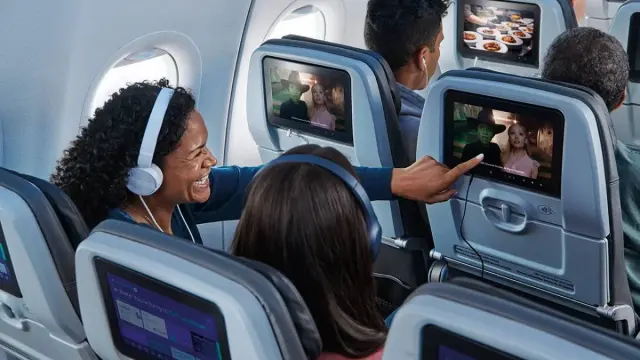
For travellers, the practical effect is a widening ladder of paid options: around $200 for extra legroom or a spot near the front, mid-tier bundles with free wifi and pre-selected meals, and full flat-bed cabins at the top. What you're less likely to find is a bare-bones middle ground — no major carrier has launched a flight without any economy seats, but the coach cabin's share keeps shrinking.
There's a flip side worth watching. As legacy airlines chase affluent flyers, the door opens for a new generation of discount carriers to undercut them on basic fares — though elevated fuel costs make that a tough launch environment for now. Either way, anyone booking a US flight in 2026 and beyond should expect to be upsold at every step of the process, and may want to price the paid seat options early: the cheapest time to lock in extra legroom is usually at booking, not at the gate.
Story reported by Agence France-Presse via Daily Sabah Travel.