Just over an hour from Cologne, close to the Belgian border, Eifel National Park proves you don't need to fly halfway around the world to find genuine wilderness. Spanning roughly 42 square miles, this western German park is one of Europe's more unusual conservation stories: it's deliberately unfinished. Since its founding in 2004, managers have let nature reclaim the land on its own, aiming for a pre-industrial forest state. Fallen timber and recovering native beech woods are left in place, and the wildlife has responded fast.
The numbers tell the story. By 2025 the park counted more than 11,400 species, over 2,600 of them threatened — a huge jump from the 230 endangered species recorded at its establishment. Red deer are here, but the star attraction is the European wildcat: more than 120 individuals have been documented, making Eifel part of Central Europe's largest continuous wildcat population. Rare black storks, once nearly extinct in Germany, have also nested in the park. They're highly sensitive to disturbance, so staying on marked paths is both a rule and a courtesy.
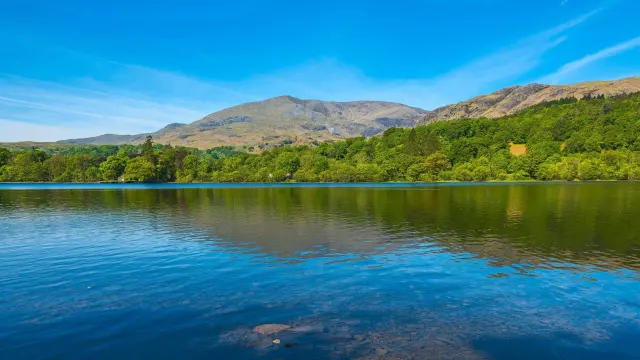
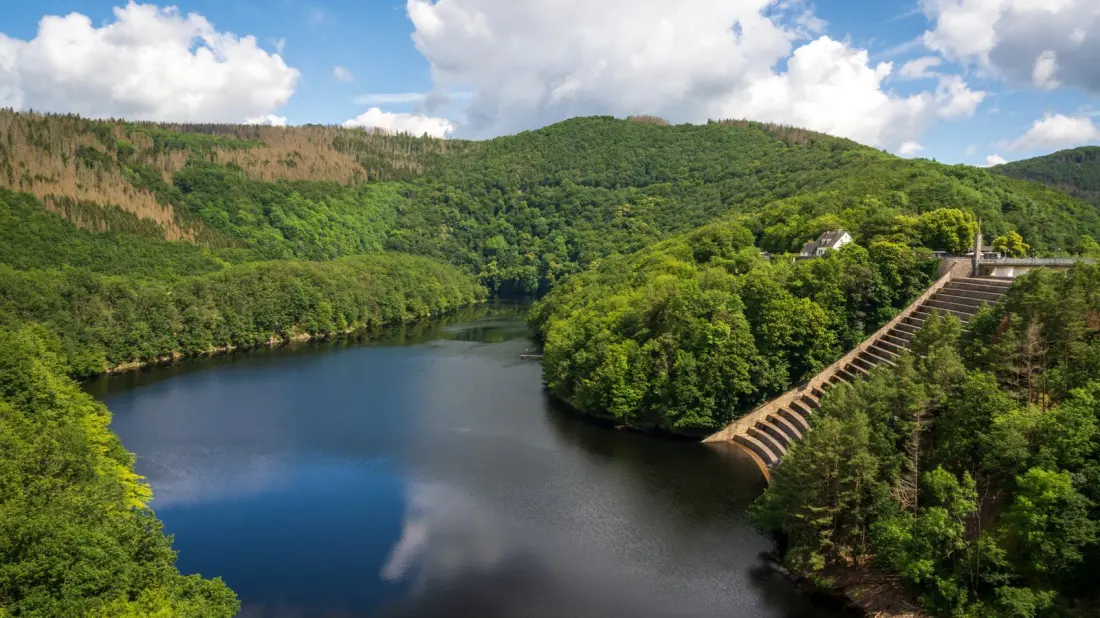
Water is half the appeal. The Rursee, Obersee and Urftsee reservoirs link up in a winding chain of blue-green bays and coves. At Badebucht Woffelsbach on the Rursee — a natural bathing spot in the village of Woffelsbach, consistently rated excellent for water quality — you can swim and lounge on terraced grassy banks. From April to October, electric boats cross the Rursee and Obersee, and ranger-led trips run about an hour and 45 minutes with commentary on the landscape and its animals.
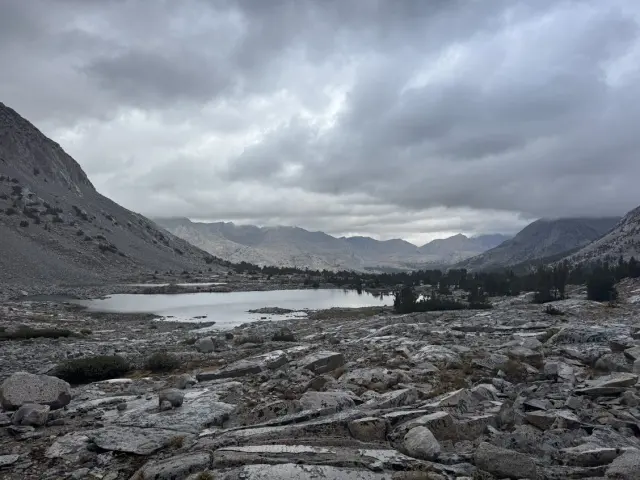
For walkers, the park's headline route is the Wilderness Trail, split into four stages. The second stage, just over 12 miles, is the crowd favourite on AllTrails (4.5 stars): it follows the high slopes above the Obersee, passes the Urft Dam and the abandoned village of Wollseifen, and delivers views across water flanked by the forested Kermeter ridge. The Urft reservoir doubles as an important waterbird habitat, so bring binoculars.
Practicalities are refreshingly easy. Free ranger-guided walks run in the park, and the Eifel National Park Center serves as the main visitor and exhibition hub — about 90 minutes by car from Cologne Bonn Airport. If you want a base with charm, the cobblestoned resort town of Monschau sits near the start of the Wilderness Trail's first stage, and there are park-certified accommodations around the borders.
Why it matters: Eifel suits travellers who want a low-effort, high-reward nature break — city dwellers from Cologne or Bonn can be hiking among wildcats' territory by mid-morning, and families get lakeside swimming, boat trips and guided tours without needing a car once on site. It's also a rare chance to watch a forest heal in real time, which gives every trail a bit of meaning beyond the views. Best suited to hikers, wildlife spotters, and anyone craving green quiet within reach of German city breaks.
Islands