
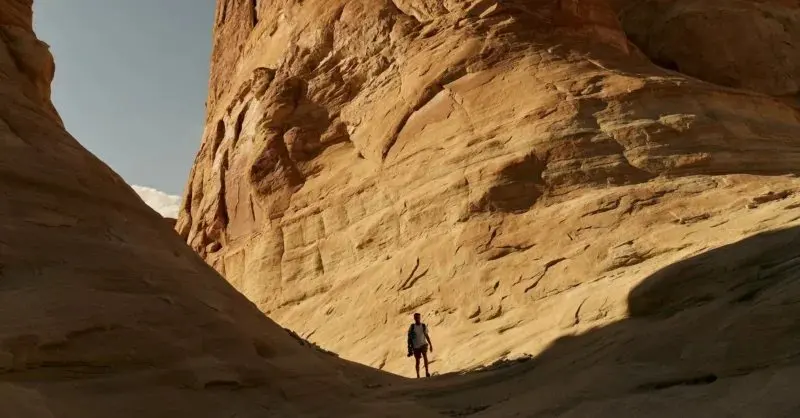
Hiking has quietly become the thing everyone does. In 2024 it was named the most popular outdoor activity in the US, with more than 63 million Americans hitting the trails, and participation has roughly doubled worldwide over the past decade. Great news for public health, less great for anyone who took up walking to escape other people. The upside: a wave of high-end lodges now sells the one thing crowded national parks can't — empty trails, often reached by helicopter.
In New Zealand's South Island, Minaret Station is reachable only by chopper, wedged between two rivers, Lake Wanaka country and Mount Aspiring National Park. The hook is heli-hiking: you're flown toward Aoraki Mount Cook or dropped on the Tasman Glacier to explore icefalls and blue caves with a guide on terrain that sees few or no other footprints.
Colorado answers with scale. Trinchera Reserve & Lodge covers 172,000 acres of the Sangre de Cristo Mountains — one of the largest private conservation holdings in the US — and bills itself as a 'high alpine safari.' Days are built around conditions and appetite: you can overnight in remote huts and summit three of Colorado's famed 14,000-foot peaks without queueing behind a trail-train of hikers.
In Utah, Amangiri remains the Southwest's benchmark for design-meets-desert. Its 900 private acres carry 12 miles of on-site trails, and the property doubles as a springboard to Buckskin Gulch, the Vermilion Cliffs, The Wave, Bryce Canyon and the Grand Canyon. Hiking programs run from two-hour walks to full-day expeditions, and with only 34 suites, the seclusion is genuine — book the Amangiri Suite if you want a lap pool and fire pit waiting after a long day.
Chilean Patagonia is spectacular but busy, which is exactly why Eleven Rio Palena Lodge sits in a remote Andean valley in the north. Seven guest rooms, trails straight from the front door through old-growth forest to waterfalls, and its own helicopter for glaciers and wild rivers. Recovery happens in wood-fired hot tubs overlooking the river.
Finally, Italy's Dolomites — a UNESCO World Heritage site across three northeastern regions — trade wilderness for a village-to-village formula with serious rewards: 14 Michelin-starred restaurants, shifting dialects and food traditions as you move valley to valley. Skip the basic rifugios, the advice goes, and have a specialist like Dolomite Mountains link the top hotels; Como Alpina Dolomites sits on the highest Alpine plateau in Europe with direct trail access, while Lefay Resort & Spa runs guided hikes through Val di Genova's waterfalls and glacial canyons, cold-water swim optional.
If your idea of a walking holiday involves more silence than signage, these five are where the crowds haven't caught up yet.