
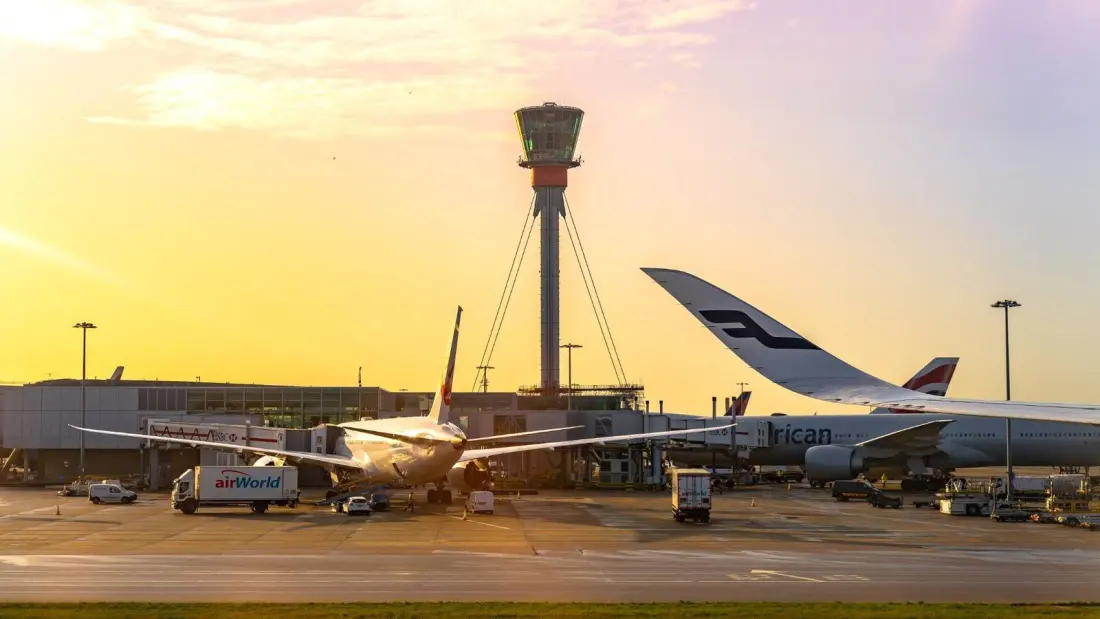
The UK's Ministry of Defence has pushed back against claims that one of its flight plans caused the air traffic control failure that grounded flights across Britain in early September, while the official investigation into what actually went wrong continues.
The outage hit on Tuesday 8 September, when the system run by National Air Traffic Services (NATS) first flagged a fault at 1:46pm local time. Engineers had a fix in place by 4:40pm and normal service resumed around 7:30pm, but the knock-on effects rippled far beyond those hours. Aviation analytics firm Cirium counted more than 2,000 flights in and out of UK airports affected across 8 and 9 September, with major hubs like Heathrow, Gatwick and Manchester among the worst hit. Nine of the world's ten most disrupted airports that day were in the UK.
The military theory came from a Financial Times report three days after the incident, which cited unnamed sources claiming a British military aircraft had filed a flight plan containing anomalous data, triggering the glitch. Notably, even two of those four sources said it wasn't the military nature of the flight itself that caused the problem. The MoD's response was blunt: it sees "no indication of an error on the part of the military" and won't say more while the investigation runs. A cyber attack has also been ruled out by separate reporting.
Timing, at least, spared travellers the worst of it. By 8 September the school year had started and the peak summer rush was over. Had it happened a week earlier, the damage would have been far greater, given 1 September was a bank holiday and one of the last big return-home days for holidaying families.
Politically, though, the pressure is only building. NATS chief executive Martin Rolfe apologised on Radio 4, and this is the second major UK ATC outage in recent memory, following a similar collapse in July 2025. Ryanair has been characteristically loud, issuing three statements in two days demanding the Transport Secretary sack Rolfe, calling him "overpaid" and saying he "cannot be trusted to report on his own failures." Rolfe has declined to say whether he'll resign, and the investigation is expected to conclude this week.
For travellers, the practical lesson is uncomfortable but real: UK airspace remains a single point of failure. When NATS goes down, there's no workaround — flights get cancelled or held, and rebooking queues spike across every airline at once. If you're flying through a UK hub, keep an eye on your airline's disruption policy, know your rebooking rights, and consider travel insurance that covers ATC-related delays. The outcome of the investigation, and whether anyone at NATS pays with their job, will shape how much confidence you can have in the system next summer.