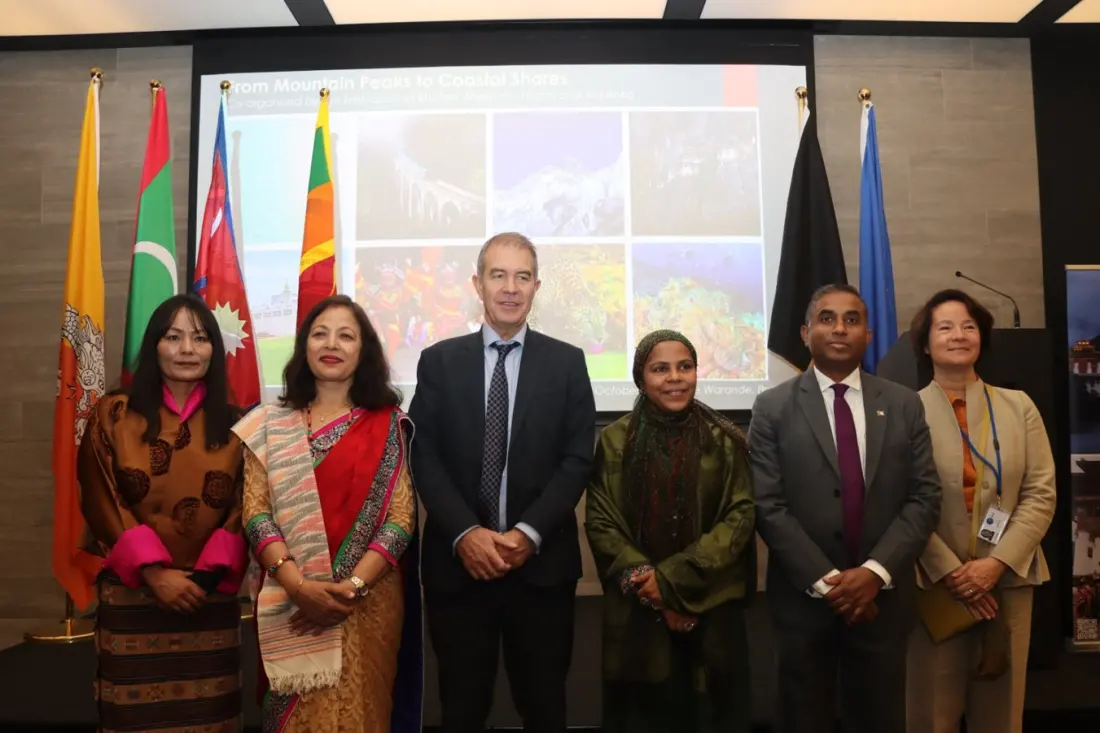
Bhutan, the Maldives, Nepal and Sri Lanka shared a stage at De Warande in Brussels on 29 October for "From Mountain Peaks to Coastal Shores", a joint tourism showcase organised by the four countries' embassies. It was the second edition of the event, which grew from a 2025 gathering of three nations when Nepal signed on, and its theme was clear: hospitality, heritage and tourism that gives back more than it takes.
The EU was on board too. Dominic Porter, Deputy Managing Director for Asia and the Pacific at the European External Action Service, framed tourism as a driver of jobs, cultural exchange and conservation, pointing to EU-funded projects such as support for Maldivian guesthouses and safari boats, heritage initiatives in Nepal, and help for Sri Lankan tourism businesses recovering from recent economic turmoil.
Each ambassador gave a different pitch. Bhutan's Tshoki Choden emphasised the kingdom's "high-value, low-impact" tourism model and a constitutional promise to keep at least 60% forest cover — plus its famously fiery chilli-and-cheese cooking. Nepal's Sewa Lamsal looked beyond Everest to rafting, paragliding, meditation retreats and Lumbini, the Buddha's birthplace. Sri Lanka's Chandana Weerasena leaned into the island's maritime history and ease of entry: tourists from 40 countries, Belgium among them, now get a free Electronic Travel Authorization. The Maldives' Fathimath Dhiyana Saeed had news of her own — the island nation will be Official Host Country of ITB Berlin 2027 from 16 to 18 March, part of a broader push branded Visit Maldives Year 2027 that includes plans for an electric hydrofoil network between islands.
Why should a traveller care? Because these four destinations are actively competing on sustainability rather than volume. Bhutan caps its tourism through daily fees, Nepal is pushing wellness and cultural travel beyond the trekking circuits, Sri Lanka is making entry cheaper for Europeans, and the Maldives is investing in greener inter-island transport. If responsible travel with a genuine local welcome is your thing, all four just made their case in front of the EU's foreign policy machinery — a signal they mean business.