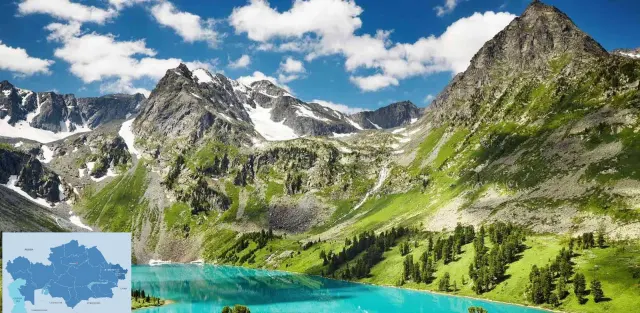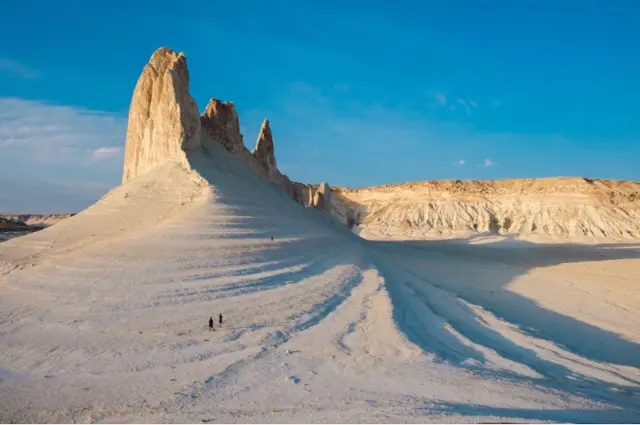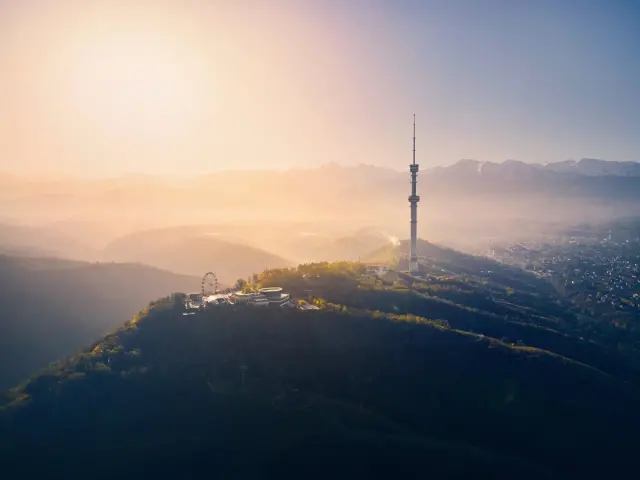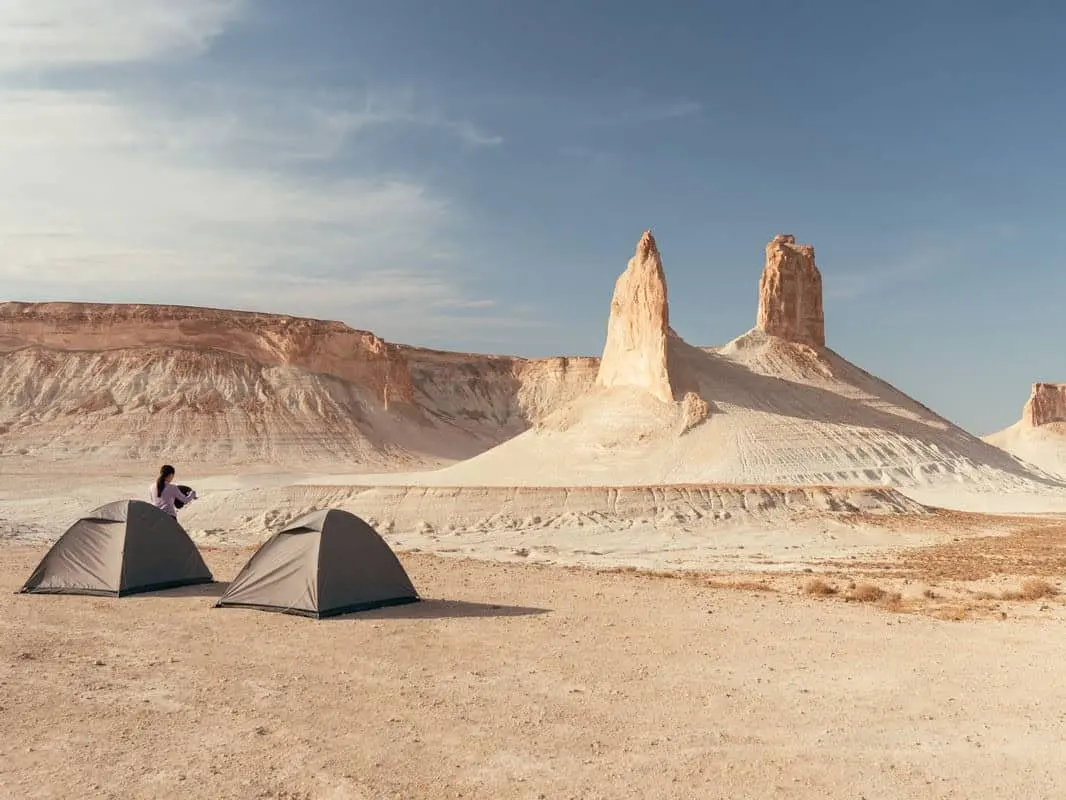
Most visitors to Kazakhstan picture Almaty's snow-capped peaks and alpine lakes. In the country's far southwest, along the eastern edge of the Caspian Sea, the scenery is nothing like it: Mangystau is a region of vast deserts, white chalk cliffs, layered canyons and salt flats, all left behind when the ancient Tethys Ocean retreated millions of years ago.
The headline sights justify the long haul. Bozzhyra's towering rock formations on the Ustyurt Plateau are the most photographed, but the Valley of Balls (Torysh), a field of giant stone spheres, the dramatic Sherkala mountain and the Kyzylkup and Tuzbair landscapes are equally worth the rough drive. Between the geology sit cultural sites: sacred underground mosques, old necropolises and Sufi pilgrimage places tied to the Aday tribe, one of Kazakhstan's best-known nomadic communities.
Here's the practical reality: Mangystau covers more than 165,000 square kilometres and once you leave Aktau, the regional capital, paved roads become rare. Most highlights, including Bozzhyra, Kyzylkup, Airakty and Tuzbair, require a 4WD with decent ground clearance. Distances on the map look short, but slow dirt tracks mean a viewpoint a few kilometres away can still take hours. Mobile reception fades fast, punctures are common, and rain can make some tracks impassable. Most travellers join a guided tour from Aktau or arrange a self-drive 4WD trip with serious preparation.
Getting there is straightforward enough. Aktau International Airport has domestic flights from Almaty, Astana, Shymkent and Atyrau — budget airline FlyArystan is usually the cheapest bet — plus international routes from Istanbul, Baku and Tbilisi. The slow option is the train: journeys to Aktau from major cities take one to three days across the steppe, with a cross-border link to Nukus in Uzbekistan for anyone combining the trip with the Aral Sea region. Adventurous overlanders can also take the unpredictable Baku-to-Kuryk cargo ferry across the Caspian, though departures run on cargo demand and weather rather than a schedule, and delays of days are normal.
Timing matters. The best windows are April to early June and September to October, when daytime temperatures are manageable and the light suits photography. Summer regularly tops 35°C, and winter nights turn cold and windy. Whenever you go, pack warm layers — desert temperatures drop fast after sunset, especially if you're camping, which many visitors do to catch some of the darkest night skies in the region.
Mangystau isn't for anyone chasing resorts or organised attractions. It rewards road-trippers and photographers who are happy with remoteness, long drives and sudden, dramatic payoff landscapes. Despite growing attention on social media, it remains one of Kazakhstan's least-visited regions, and that emptiness is precisely the appeal — you can drive for hours without meeting another traveller, just camels.
Story via Journal of Nomads.