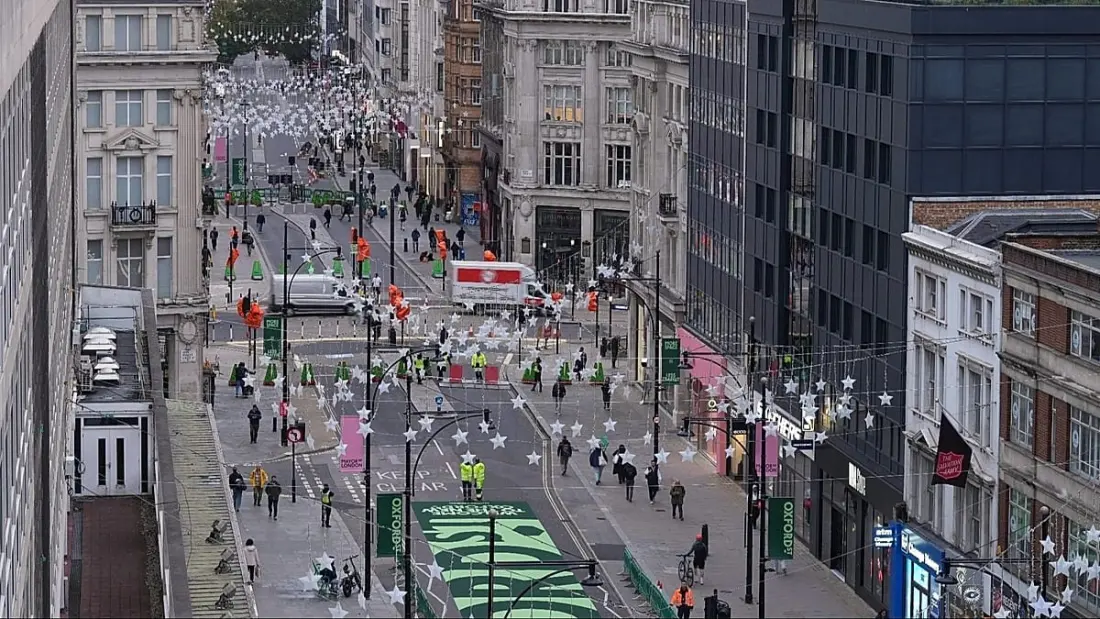
London's busiest shopping street has undergone a big change just before the festive rush: since 26 October, nearly a full kilometre of Oxford Street — the stretch between Orchard Street and Great Portland Street — is completely off-limits to cars, buses and bicycles. Vehicles are now pushed onto surrounding roads, leaving shoppers to wander what is arguably the UK's most famous retail strip without dodging traffic.
The pedestrianisation is the opening move in a longer overhaul. City Hall plans to add trees, seating and two new public squares, with further work starting in the new year once officials have gathered feedback from visitors. Mayor Sadiq Khan called it "a new era" for the street, and the ambition is explicit: to put Oxford Street in the same bracket as Times Square, the Champs-Élysées and La Rambla as a global destination in its own right, not just a place to buy a jumper.
The idea isn't new — officials have been kicking it around for more than a decade — but it gained real traction over the past two years with the creation of the Oxford Street Development Corporation. Residents had worried diverted traffic would swamp their side streets, but a public consultation concluded that going car-free would draw in new shops and more visitors. The Elizabeth Line also helped the case, with its dedicated Oxford Street station pulling travellers straight into the heart of the district.
The street handles around half a million visitors a day, funnelled between anchors like Selfridges, John Lewis and Zara, so the change will be immediately noticeable to anyone who has previously battled the pavements and crossings. Timing matters too: the closure landed just before peak season, when the street's famous Christmas lights switch on — a tradition dating back to 1959.
This year's display has a twist. The lights are Harry Potter themed, tying in with the opening of the UK's largest official Harry Potter store on the street and the launch of the new HBO series. Past years have seen around 5,000 stars glowing via 300,000 LED bulbs, so expect a similarly maximalist spectacle. The mayor's pitch is simple: come, shop, enjoy — though anyone allergic to crowds may want to pick a weekday morning rather than a Saturday in December.
For travellers, this is a genuinely improved experience of an institution that could previously feel like an obstacle course. With no kerbs, crossings or exhaust fumes, browsing between department stores becomes far more pleasant, and the planned greenery and squares should push it further in that direction. If you're visiting London for the festive lights or the January sales, the car-free stretch makes the whole outing easier — and it pairs neatly with nearby detours like Regent Street, Soho or Hyde Park. Just remember the neighbouring streets are now absorbing the traffic, so allow extra time if you're catching a bus or taxi out of the area.