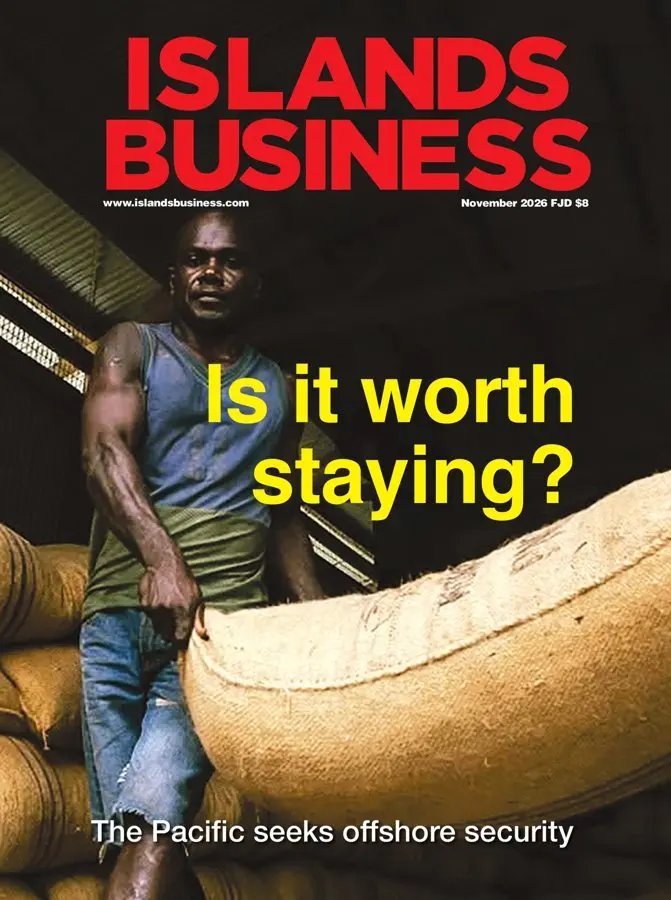
Islands Business has published a piece asking a blunt question — "Is it worth staying?" — about the future of Pacific Island Countries, the scattered group of small island states stretching across the ocean from Fiji to Kiribati. The full article sits behind a subscriber paywall, but its framing is telling: the Pacific nations are described as some of the most geographically dispersed and climate-vulnerable economies on Earth. That single line captures the dilemma these countries face, and it matters for anyone dreaming of a trip across the region.
The Pacific Islands Forum family of countries covers a vast expanse of ocean with relatively small populations, which makes everything harder and more expensive — shipping, power, healthcare, tourism infrastructure. Add rising seas, stronger cyclones and coral bleaching, and you get nations whose very geography works against their resilience. Several low-lying atoll states, including Kiribati and Tuvalu, have become global symbols of climate risk, with long-running conversations about relocation, land reclamation and international climate financing.
For travellers, this isn't just abstract policy talk. Tourism is a pillar of the economy in places like Fiji, Vanuatu, Samoa and the Cook Islands, and visitor spending directly supports communities on the climate frontline. Choosing to visit — and to spend locally at family-run guesthouses, dive operators and markets — is one of the more practical ways to back these economies while they fight to stay viable. Many resorts in the region have also shifted toward solar power, reef-protection programmes and disaster-preparedness work, so it's worth asking about a property's environmental practices when booking.
Practical realities follow the geography too. Distances are enormous, flight schedules are thin and weather disruptions are more than a nuisance — a cyclone season roughly running November to April in much of the South Pacific can reshape a whole trip. Travellers planning multi-island itineraries should build slack into their plans and consider travel insurance that covers weather delays.
The question "is it worth staying?" is ultimately aimed at policymakers and residents weighing migration against adaptation. But it carries a quiet message for visitors as well: the Pacific is one of the most rewarding and most vulnerable regions you can travel to, and how you go — where your money lands, how you treat reefs and communities — genuinely counts.
Islands Business