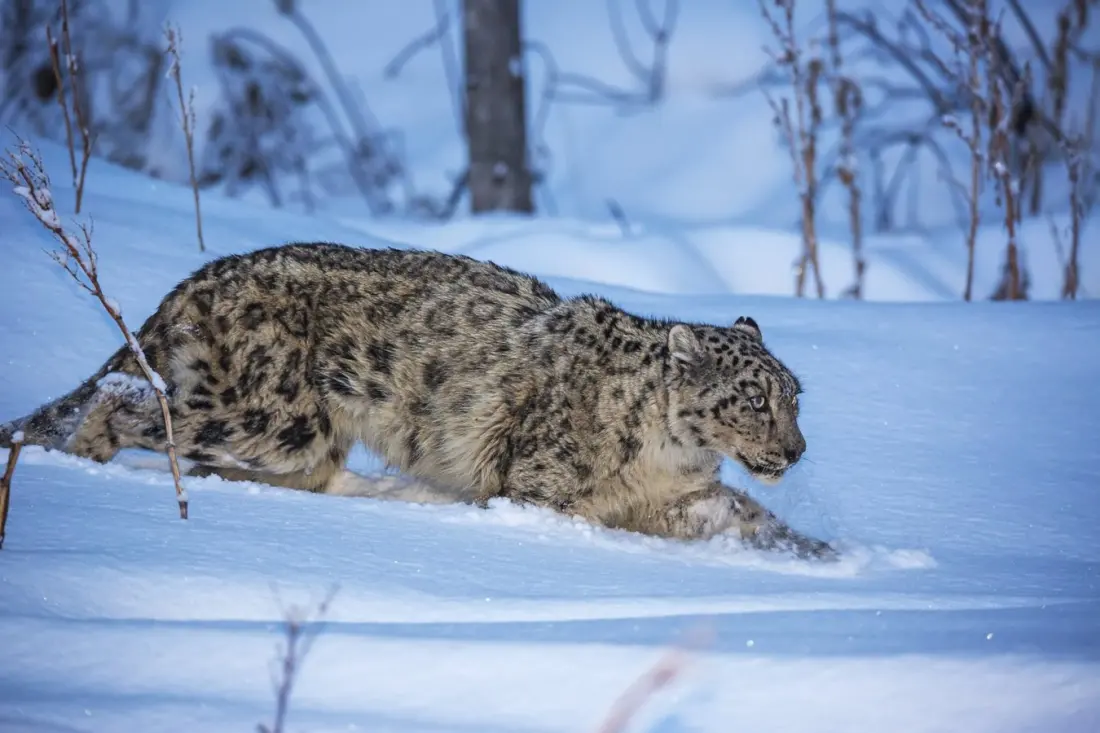
Kazakhstan now counts roughly 200 snow leopards in the wild, close to double the 100–110 animals estimated in the early 2000s. The figures came from the Ministry of Ecology and Natural Resources, announced on Nov. 25 during talks between Kazakhstan's Ecology Minister Alibek Kuantyrov and Tatarstan's ecology minister Azat Ziganshin.
The recovery didn't happen by accident. Around 80% of the country's snow leopard habitat now falls inside protected natural areas, and 2025 saw the creation of the Merke regional natural park in the Zhambyl Region, set up partly to safeguard the big cat's terrain. On the research side, the Institute of Zoology and staff at protected areas track populations with camera traps and satellite collars — 17 leopards were wearing the devices as of 2026, giving scientists a live picture of how the animals move across the high country.
The Kazakh meeting wasn't an isolated effort. Regional cooperation is expanding: Tatarstan plans a Snow Leopard scientific centre in the Altai Republic, and the Ak Ilbirs research centre is being opened jointly with Kyrgyzstan. The snow leopard carries real cultural weight across the region, symbolising strength and nobility in both Kazakhstan and Tatarstan, which helps keep it a political priority rather than an afterthought.
For travellers, this is quietly significant news. The ghost of the mountains is famously hard to see anywhere on earth, and Kazakhstan remains one of the less-trodden options compared with India's Hemis National Park or Nepal. The Ili Alatau and Trans-Ili Alatau ranges above Almaty, the Dzungarian Alatau and the Altai areas near the Chinese and Russian borders all hold snow leopard territory, and the growing network of parks and monitoring programmes means better trails, ranger infrastructure and a chance that local guides know where recent camera-trap activity has been recorded.
Even if the cat itself stays hidden — and it usually does — the same high valleys offer argali sheep, ibex, golden eagles and, in the Almaty region, easy access from a major city with good cafes and ski resorts an hour from town. A doubling population also suggests healthier prey numbers and functioning ecosystems, which is exactly what wildlife-focused visitors want to hear before booking a trip.
Practicalities are improving too. Kazakhstan has liberalised visas for many nationalities in recent years, Almaty is well connected from Europe, the Gulf and Asia, and the shoulder seasons of spring and early autumn offer stable weather for mountain trekking. Pairing a snow leopard-focused expedition with Kyrgyzstan is increasingly straightforward given the joint research centres and shared conservation agenda across the border.
You'd be extremely lucky to sight one — but knowing the population is heading in the right direction makes a trek through Kazakhstan's high ranges a more meaningful proposition than it was twenty years ago.
Story based on reporting by The Astana Times.