
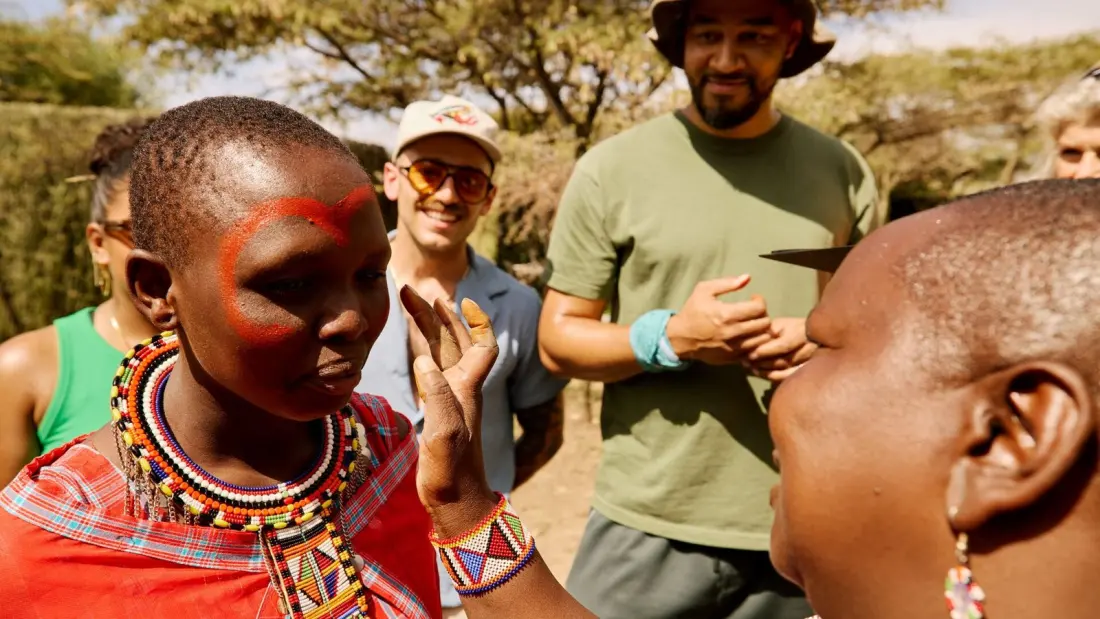
A few hours' drive west of Nairobi, on the edge of the Maasai Mara, sits Tepesua — a community founded and run by Hellen Nkuraiya, a Maasai woman who survived FGM and a forced marriage at 11 before escaping, finishing school and training as a teacher. When she saw how many of her students were dropping out to be married off, she quit teaching and started pushing back against the customs themselves. In 2015 she founded Tepesua, and in 2025 the Kenyan government recognised her as a national hero under the Kenya Heroes Act.
The community now includes two schools, a village for widows and families, and an eco-camp that hosts travellers. More than 100 girls who faced FGM or forced marriage have found refuge there over the years. It remains dangerous work: as one visiting traveller put it, Hellen's biggest opponents are Maasai who want the customs to continue, and she has had to physically protect girls from fathers and brothers trying to take them back.
The numbers explain why. Kenya banned FGM in 2011 and national rates have fallen from about 38% in 1998 to roughly 15% in 2022. Among Maasai women, though, an estimated 57% have been cut, nearly half of them between the ages of 10 and 14.
What makes Tepesua interesting for travellers is the model. Intrepid Travel has been bringing groups there since 2018 — it's the only tour operator that does — on day visits and overnight stays at the eco-camp. Tourism income funds the whole community, the camp doubles as a market for women's handmade crafts, and a livestock scheme is building food security for widows. There's also a clever piece of social engineering: Hellen installed a borehole and restricted access to families who enrol their daughters in school. The school is named Enkiteng Lepa — 'Our Purple Cow School' — because in Maasai culture a cow means everything, and education is the thing that can transform a life the way a cow transforms a household.
Visitors describe a proper welcome: warriors in red and blue shukas, singing and chanting, demonstrations of Maasai daily life — including the acacia-thorn toothbrush trick. One Australian couple featured in the story were so moved by their 2023 visit that they returned a year later as volunteers to repaint classrooms, and were formally welcomed into the tribe. Another traveller who met a rescued girl now training at beauty school noted the generational shift: for young women at Tepesua, university is now on the table.
If you're weighing up a safari in the Mara and wondering whether community visits add anything, this is a case where they clearly do — your money goes directly into schools and safe housing, and you meet the people it affects. It's an example of tourism done as partnership rather than spectacle, and it suits travellers who want their trip to mean something beyond wildlife sightings.