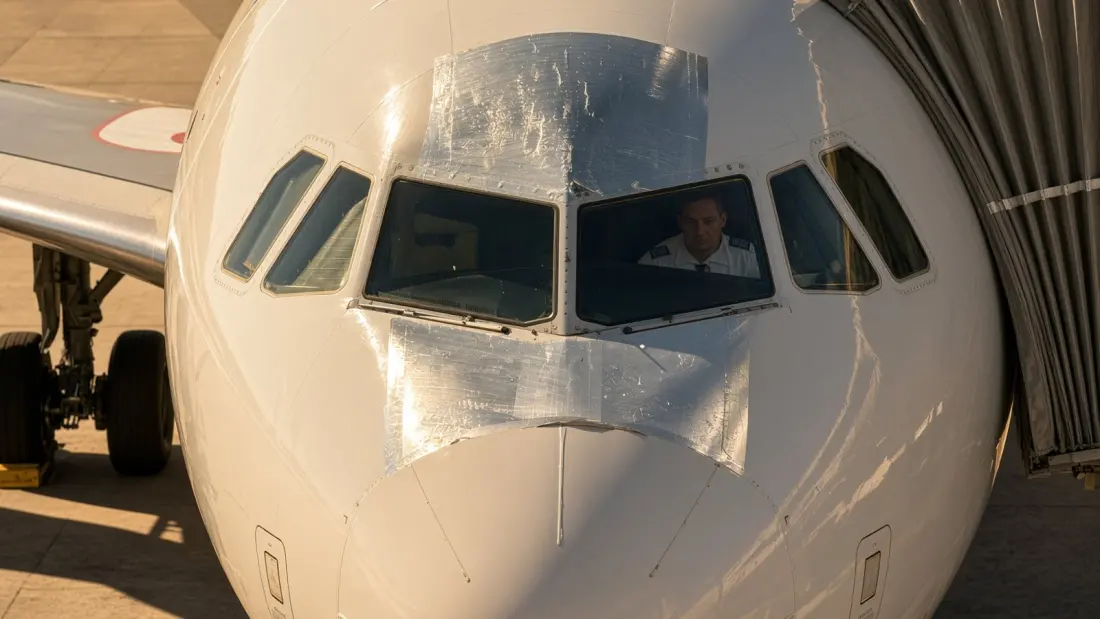
Photos keep going viral: a United 787 with silvery strips near the fuselage, an American Airlines tray table patched over, a nose section in Albuquerque that looks freshly taped up before boarding. Passengers post them with variations of the same question — is this plane being held together with duct tape?
The short answer is no. What looks like hardware-store duct tape is actually speed tape: a pressure-sensitive aluminium tape engineered specifically for aircraft. Unlike household tape, it can stay bonded to a fuselage or wing at high speeds, shrugs off extreme temperatures and weather, and its use is tightly controlled. Airlines follow FAA guidelines and the manufacturer's structural repair manual when deciding where it can go.
Crucially, speed tape is never a fix for anything structural. It's meant for minor, non-structural issues — covering small dents or scratches that don't affect the airframe, or securing a loose panel temporarily until a proper repair is made, usually within days. If a patch could compromise structural integrity or create an aerodynamic problem, speed tape isn't an option under the rules. So a plane with speed tape on it is, by definition, airworthy.
The problem isn't safety — it's optics. After the Boeing 737 MAX 9 door plug incident, a string of air traffic control scares and widely reported pilot errors, passengers are primed to read any visual oddity as a red flag. Speed tape patches are landing on social media at the worst possible moment, and each one chips away at confidence in an airline's maintenance standards even when nothing is actually wrong.
There's a long history here, too. Pressure-sensitive tape dates back to the 1840s; duct tape itself was a Second World War invention. The materials have evolved enormously, but public understanding hasn't kept pace. The writer's suggestion is a sensible one: airline staff should know this stuff well enough to explain it before a nervous passenger has to ask — or post a photo.
For travellers, the takeaway is simple. Spotting silvery tape on a wing or fuselage doesn't mean the airline is cutting corners; it means a minor cosmetic fix was made within the rules until a permanent repair happens. If anything, the regulated, documented use of speed tape is an example of how aviation handles even trivial damage with formal procedures. The real issue for airlines is communication — because in an era when every passenger has a camera and a social account, an airworthy plane that looks alarming is still a problem worth solving.