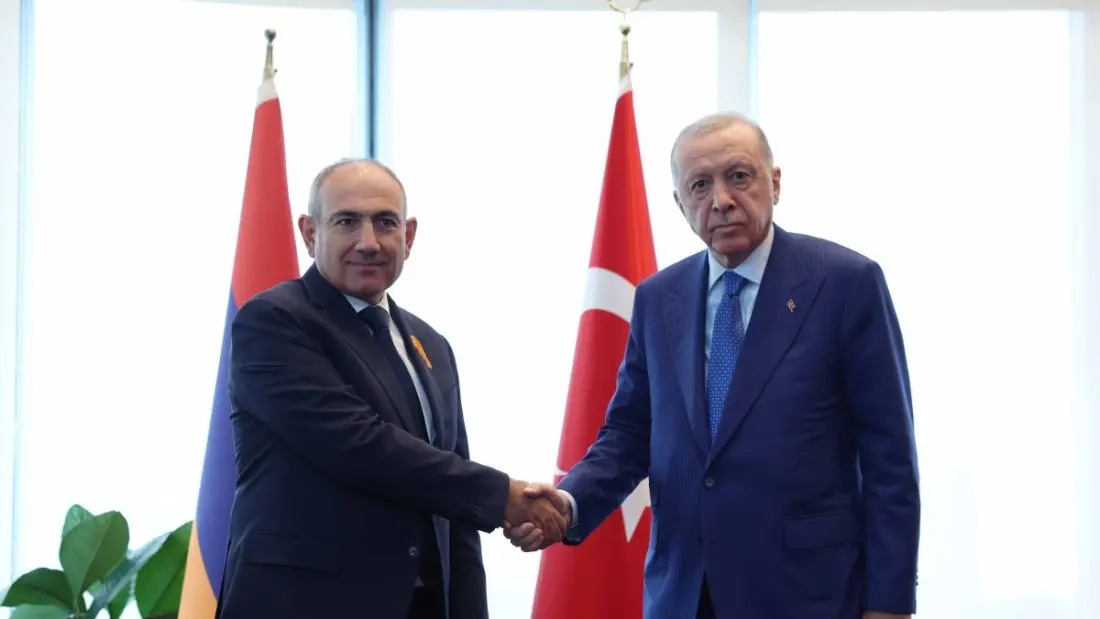
Presidents and prime ministers gathered in New York this week for the UN General Assembly, but one side meeting stood out for anyone who has ever dreamt of driving from eastern Türkiye into the South Caucasus. Turkish President Recep Tayyip Erdoğan sat down with Armenian Prime Minister Nikol Pashinyan at the Turkish House on Wednesday, in a closed-door session also attended by Turkish Foreign Minister Hakan Fidan.
The talks are part of a slow, steady thaw between two neighbours that have had no full diplomatic relations for decades. Their shared land border has been shut since 1993, cutting off one of the most storied overland routes in the region. Since late 2021, when both countries appointed special envoys, the process has picked up pace: direct flights and air cargo links between Türkiye and Armenia have resumed, a small but meaningful sign that the ice is cracking.
Ankara has tied progress with Yerevan to the wider peace track between Armenia and Azerbaijan, arguing that a comprehensive Baku-Yerevan agreement plus normalised Turkish-Armenian relations could unlock regional stability, better transport connections and economic cooperation across the South Caucasus. For travellers, that last part is the interesting bit. Reopening the border at Gyumri-side crossings would reconnect Trabzon and Kars with Armenia, reviving a corridor that backpackers and road-trippers have been locked out of for more than 30 years.
Nothing has reopened yet. The border remains closed, and normalisation talks have stalled and restarted many times before, so nobody should book a Kars-to-Yerevan bus just because two leaders shared a room in New York. But the frequency of these meetings, and the momentum generated by the Armenia-Azerbaijan peace process, suggest the region's map of practical travel routes may look very different within a few years.
For now, the story matters to two audiences. Travellers with a long-haul interest in the Caucasus should keep an eye on it: if the border eventually opens, it becomes possible to link Istanbul, eastern Türkiye, Armenia and Georgia into a single, spectacular overland trip that simply isn't feasible today. Industry watchers, meanwhile, will note that resumed flights and cargo links are usually the precursor to broader movement — airlines, tour operators and border-town businesses in both countries are quietly positioning for that outcome.
In the meantime, both countries remain eminently visitable on their own. Istanbul is a major hub with connections across the Caucasus, Armenia welcomes most visitors visa-free or with an easy e-visa, and the reformed direct flights between the two countries mean determined travellers can still experience both sides of this contested frontier — just not across it. Watch this border. It has been closed longer than most of today's travellers have been booking flights, and it is the single biggest unlock for South Caucasus overland travel.