
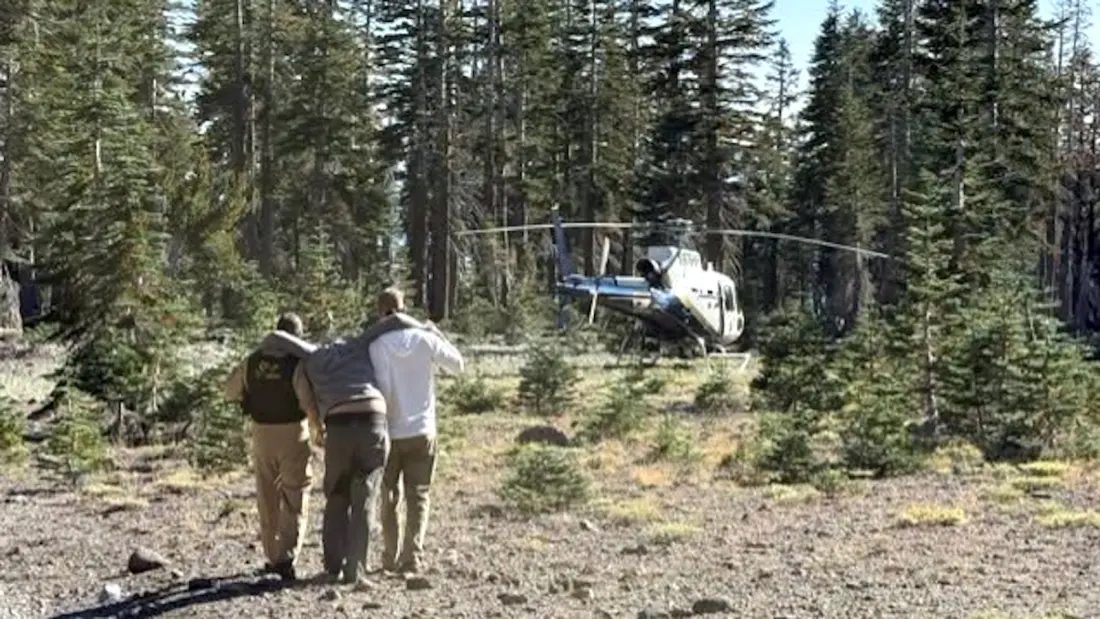
A climber from San Jose summited Mount Shasta at around 7:30 P.M. on September 10 — late in the day, as it turned out. On his way down Avalanche Gulch, he tried to glissade, sliding on his Ice axe-free descent turned disastrous when he lost control and plummeted roughly 500 vertical feet down the snow slope.
The fall left his feet badly lacerated and swelling fast — a serious problem at altitude, where tissue swells rapidly and rigid mountaineering boots become agony. So he took the boots off. Barefoot, he crawled through the night down the rest of Avalanche Gulch toward Horse Camp, a historic alpine refuge at about 7,900 feet.
Things could have gone much worse. His phone died after the summit, so he couldn't call for help. But he had done one thing right: he'd told friends his plan and checked in with updates. When he went silent, they reported him missing to the Siskiyou County Sheriff's Office, and a search kicked off at 2 P.M. on September 11 involving Mount Shasta Climbing Rangers, county search and rescue, and a California Highway Patrol helicopter. Just two hours in, a hiker called from Horse Camp — they'd found the climber, barefoot, at the cabin. He was airlifted to a nearby hospital.
The incident is a blunt reminder of how much timing matters on this peak. Avalanche Gulch is the classic, non-technical route up Mount Shasta, but it's no walk: a 7,000-foot vertical gain over steep snow, ice, and rockfall-prone terrain, requiring crampons, an ice axe, a helmet, and basic snow skills. The Mount Shasta Avalanche Center recommends a noon turnaround time — no summit is worth descending in the dark — and warns that late-season climbing means loose scree and dramatically increased rockfall.
For anyone eyeing Shasta, the takeaways are simple. Start early so your descent happens in daylight, not at dusk. Leave a detailed itinerary with someone and agree on what they'll do if you miss a check-in — in this case, that habit likely saved a life. And never count on a phone or GPS alone; carry a backup and know how to navigate without them. The climber's friends even drove up to join the search, which shows how a well-briefed contact can act fast.
Whether you're a beginner mountaineer using Shasta's glaciers to learn crampon and ice axe skills, or just a hiker drawn to one of California's most iconic volcanoes, this story is worth ten minutes of your time before you lace up.