
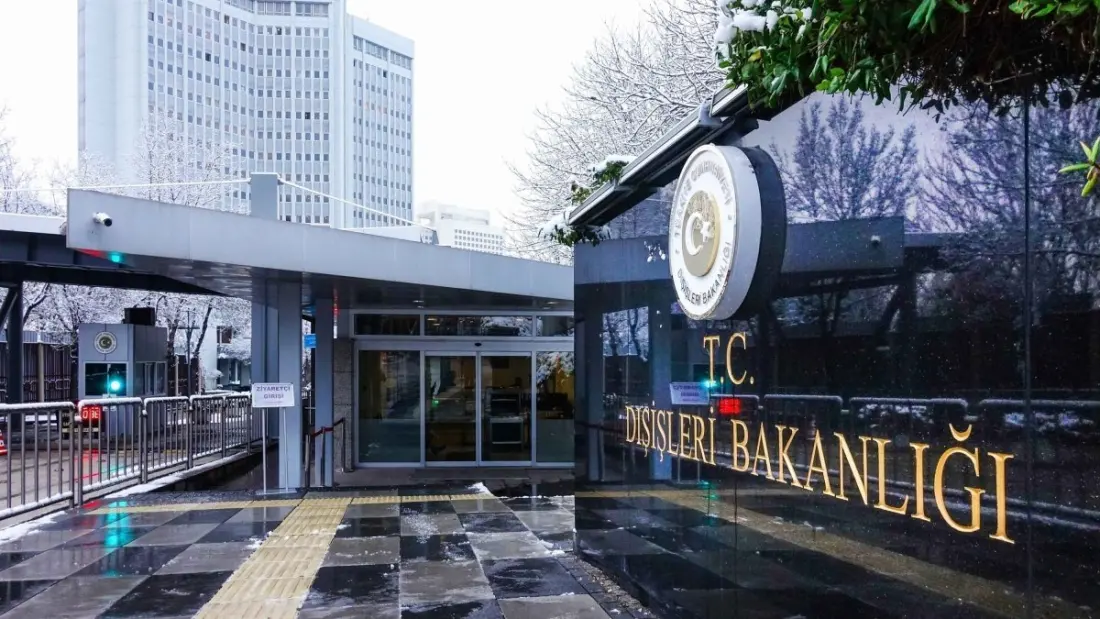
Türkiye and Greece are trading barbs once more, and this time the flashpoint is a century old. On 14 September, the Turkish Foreign Ministry dismissed statements from Greek officials about the Greco-Turkish War era as "baseless", telling Athens to act with "seriousness and common sense".
The spat escalated after Greek Defence Minister Nikos Dendias posted on X about Greeks who left Anatolia for Greece and gave his own reading of the Turkish War of Independence period. Ankara hit back by releasing archival documents and photographs on its social media channels, which it says document atrocities committed by Greek forces during their occupation of Anatolia between 1919 and 1922, and during their subsequent retreat.
The ministry described the records as evidence of a "systematic policy of destruction", pointing to the Treaty of Lausanne — under which it says Greece accepted responsibility and a reparations obligation under Article 59 — and to contemporary international reports. One case cited in the released material involves a village near Bursa, described by the ministry as a painful example of a massacre of Turkish civilians.
For anyone travelling between the two countries, the immediate practical impact is minimal. Ferry routes across the Aegean, land crossings at Ipsala and Pazarkule, and the heavy flow of tourists in both directions continue as normal, and diplomatic spats of this kind rarely touch visitors directly. Both countries remain in the Schengen-adjacent travel ecosystem in different ways: Greece is in the EU and Schengen, while Türkiye has its own straightforward e-visa system for many nationalities.
Still, the story matters for travellers in a broader sense. Türkiye and Greece have a long list of unresolved disputes — maritime boundaries, airspace, the status of islands — that flare up regularly, usually around anniversaries or domestic political moments. Tensions tend to play out in statements and archival releases rather than at border posts, so trips rarely need to be rearranged. The useful habit is simply checking official travel advisories before travelling, as you would anywhere, and being aware that the 1920s history is still a live, sensitive topic on both sides of the Aegean.
If you're visiting Bursa, the city mentioned in the Turkish ministry's release, it remains one of Türkiye's most rewarding short trips from Istanbul — Ottoman-era mosques, the Grand Bazaar's leather and silk trade, and Uludağ for skiing in winter or hiking in summer. None of the current political noise affects day-to-day life there.
The bottom line: expect more rhetorical volleys between Ankara and Athens as historical anniversaries approach, but travellers with trips booked to either country can carry on. Keep an eye on the news, mind the sensitivities in conversation, and enjoy two of the Mediterranean's most rewarding destinations.
Daily Sabah Travel