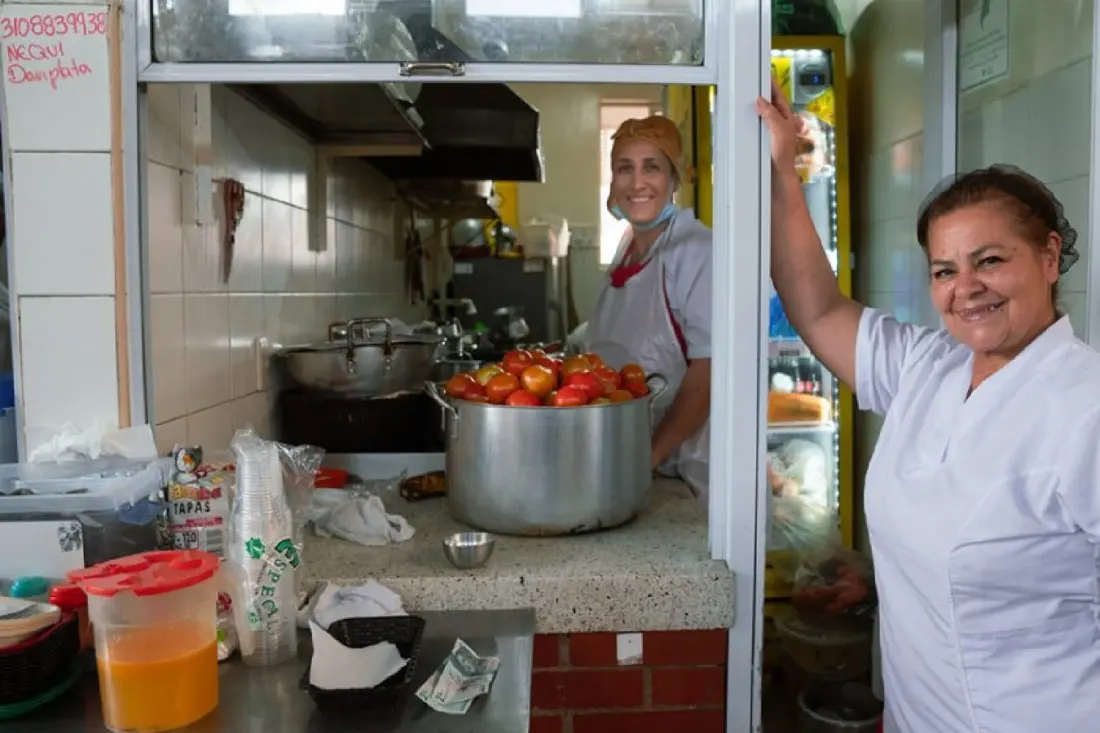
Tourists in Bogotá are increasingly skipping the fruit stalls and heading straight for the kitchens inside the city's traditional market squares. That is one of the early findings of a Living Heritage Inventory the city has been compiling with communities across 19 markets in the District System since 2024 — research that reframes these markets as gastronomic destinations in their own right, not just places locals buy vegetables.
The Bogotá Mayor's Office says food preparation and processing occupations now stand out as the clearest example of how cuisine shapes how the markets actually work. Inside a single square you might find fried food platters, wrapped foods, fresh juices, regional dishes from central Colombia, breakfasts and café fare all being cooked and served side by side. Many of the cooks learned their techniques through family transmission and daily practice rather than formal training, and the recipes trace back to different regions of the country — which is exactly why foreign visitors find them so appealing. In effect, a market square concentrates a large slice of Colombia's culinary culture in one walkable space.
The District Tourism Institute (IDT) has been actively promoting markets like La Concordia in the city centre to international visitors, who come to eat rather than shop. The numbers back the strategy up: IDT director Angela Garzon said in April that Bogotá received more than 14 million visitors in 2025, roughly two million of them from abroad, with thousands heading to the market squares for food. The city ranks among Latin America's strongest destinations for gastronomy, culture and entertainment.
The research also highlights who is doing much of the cooking. Women lead food preparation, processing and sales in these markets, run support networks, organise community activities and pass culinary knowledge on to younger generations — know-how that is rarely written down but updated every day. The kitchens don't operate in isolation either: they buy supplies from neighbouring stalls, feed market traders and workers, and maintain ties with farmers and regular customers, forming an internal economic network that helps sustain the whole market.
The Mayor's Office describes the squares as something like emotional and gustatory archives of the city — places where returning customers, inherited recipes and dishes that evoke distant regions preserve family and community memory. Practices like food donations, waste reduction and affordable meals also tie the kitchens to food security in surrounding neighbourhoods.
The inventory is still a work in progress, and officials stress the findings are preliminary and being developed with the market communities themselves. But for travellers, the message is already clear: if you want to understand Bogotá through its food, the best seat in the house might be a plastic stool in a market hall rather than a trendy restaurant in Chapinero. Come hungry, order whatever the regulars are having, and expect a meal that carries a couple of generations of know-how behind it.