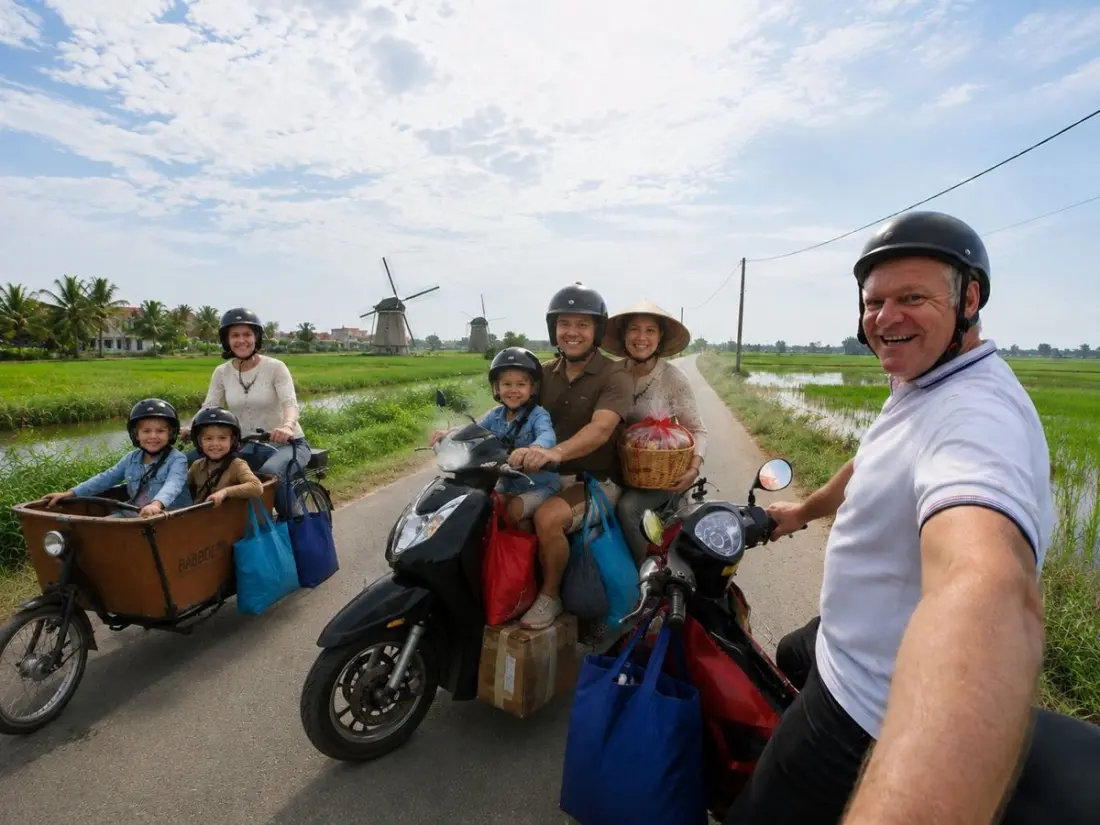
When Danny Haberer moved from the Netherlands to Go Cong, a town in Vietnam's Tien Giang Province in the Mekong Delta, his neighbours asked him the same question every day: "Ăn cơm chưa?" — "Have you eaten yet?" Taking it literally, he politely replied that he'd eat soon. They asked again the next day, and the day after. He began to wonder if he looked underfed. Only later did the penny drop: it isn't a question about food at all. It's a greeting — a way of saying "I see you, and I care about you."
His explanation of the moment, posted on social media, struck a chord with Vietnamese readers, who confirmed the ritual. "Ăn cơm chưa?" tends to appear around mealtimes — roughly 11am to 1pm and 6pm to 8pm — while outside those hours people switch to situational greetings like "Where are you heading?" or "Just got back?" Several readers noted their mothers still open every phone call, even at 9pm, with the same question. The phrase runs deepest in the Mekong Delta, where blunt, everyday questions are a shortcut to warmth and neighbourliness. Haberer now answers with a snappy local "Rồi!" — "Done!"
For travellers, this is a genuinely useful piece of cultural decoding. In a country where overt declarations of affection are rare, care shows up in gestures: a morsel placed in your rice bowl, a parting "travel safely", or that repeated question about your stomach. If a hotel owner or street vendor asks whether you've eaten, they're not soliciting your meal plans — a friendly "Rồi rồi" or a smile will land perfectly.
Haberer has built a following by vlogging this kind of everyday Vietnamese life — riding motorbikes, growing vegetables, raising fish and eating his way through the delta. His trivia is worth stealing for your own trip: Ho Chi Minh City's famous Ben Thanh Market was built on a filled-in swamp called the Bo Ret pond, opening in 1912's aftermath of festivities in 1914 with three days of fireworks, floats and a reported 100,000 attendees — plus, legend has it, a woman named Vo Thi Vuong who fought a tiger to a win at the opening ceremony. He also marvels that Ho Chi Minh himself used 175 names and aliases over his revolutionary career, adopting "Ho Chi Minh" only in 1942.
He's honest about expat life, too. After two years of declaring loyalty to Vietnamese breakfasts, he caught himself at a hotel buffet reaching for bread and cheese — a full Dutch breakfast on autopilot — before pledging redemption via a bowl of hu tieu noodle soup back in Go Cong.
Why does this matter for a holiday? Because Vietnam rewards travellers who engage with the small rituals, not just the sights. Learn one greeting, use it around lunchtime, and doors open. Haberer's story is a neat reminder that the best cultural souvenirs often come from neighbours who keep asking if you've eaten.