On 23 September 2006, a helicopter carrying much of the leadership of Nepal's conservation world clipped a mountain above Ghunsa in Taplejung district during a monsoon storm. All 24 people aboard died, including WWF Nepal's Chandra Prasad Gurung, Himalayan geographer Harka Gurung, wildlife chief Tirtha Man Maskey, WWF Eastern Himalayas chief Mingma Norbu Sherpa, and diplomats and NGO staff from Finland, the USA and the UK. They had just handed over management of the Kangchenjunga Conservation Area to local communities the day before.
Many predicted the crash would cripple Nepal's environmental movement. It did the opposite. Two decades on, the country's forest cover has climbed to 46%, wild tigers have risen from 121 in 2010 to 429, and rhino numbers have grown from 645 in 2015 to 752, while poaching has collapsed. Nepal now hosts the fourth-largest snow leopard population of the species' twelve range states.
The most tangible legacy is educational. Five memorial scholarships were set up in the victims' names, and more than 200 students — largely from rural communities and mostly women — have completed undergraduate or postgraduate studies with their help. The Mingma Norbu Memorial Scholarship sends two students every two years to Lincoln University in New Zealand, where Sherpa himself once studied on a scholarship created by Edmund Hillary. Graduates now work in conservation areas across the country, including Sonam Tashi Lama with the Red Panda Network in Taplejung.
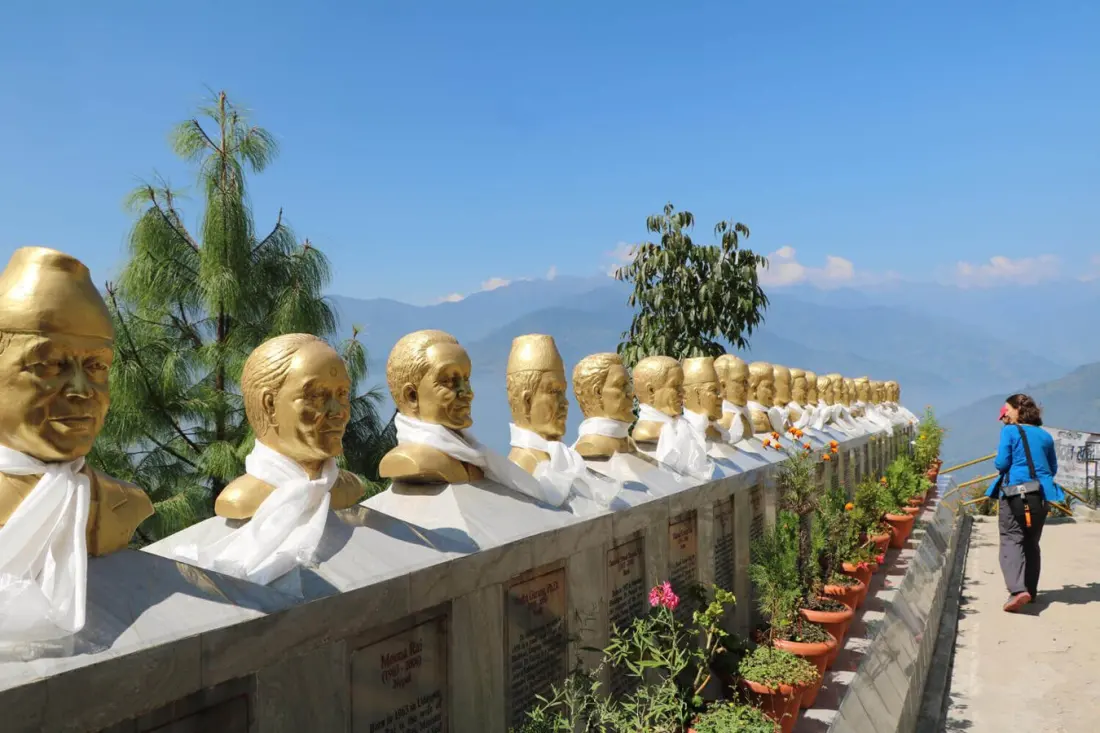
There is also a physical legacy. Every 23 September a service is held at a memorial in Taplejung with statues of the 24 victims, and a Conservationist Memorial Statue Park sits at Ramkot on the western rim of Kathmandu Valley — though that one has been left overgrown and dilapidated, with some names faded off the statues.
For travellers, the story adds real depth to a visit. Nepal's acclaimed community forestry model — born partly from the 'conservation area' concept championed by Chandra Prasad Gurung, which put local people rather than fences in charge of nature — is why treks in Kangchenjunga and community forests around Chitwan feel so different from fenced-up parks elsewhere. If you are trekking in Taplejung or walking the ridges above Kathmandu, the memorials are worth seeking out, both to pay respects and to understand how much of the country's conservation success rests on what was lost at Ghunsa. The work ahead is real: climate change, unregulated development and human-wildlife conflict all pressure the gains, and WWF Nepal's current country director Ghana Gurung argues that nature-based solutions tied to local livelihoods are the only way forward.
The two-decade mark is a good moment to read this as more than a tragedy — it is the story of how a small country turned one of its worst professional losses into measurable results you can see on a trek: more tigers, more forest, more rhinos.
Reporting by Nepali Times.