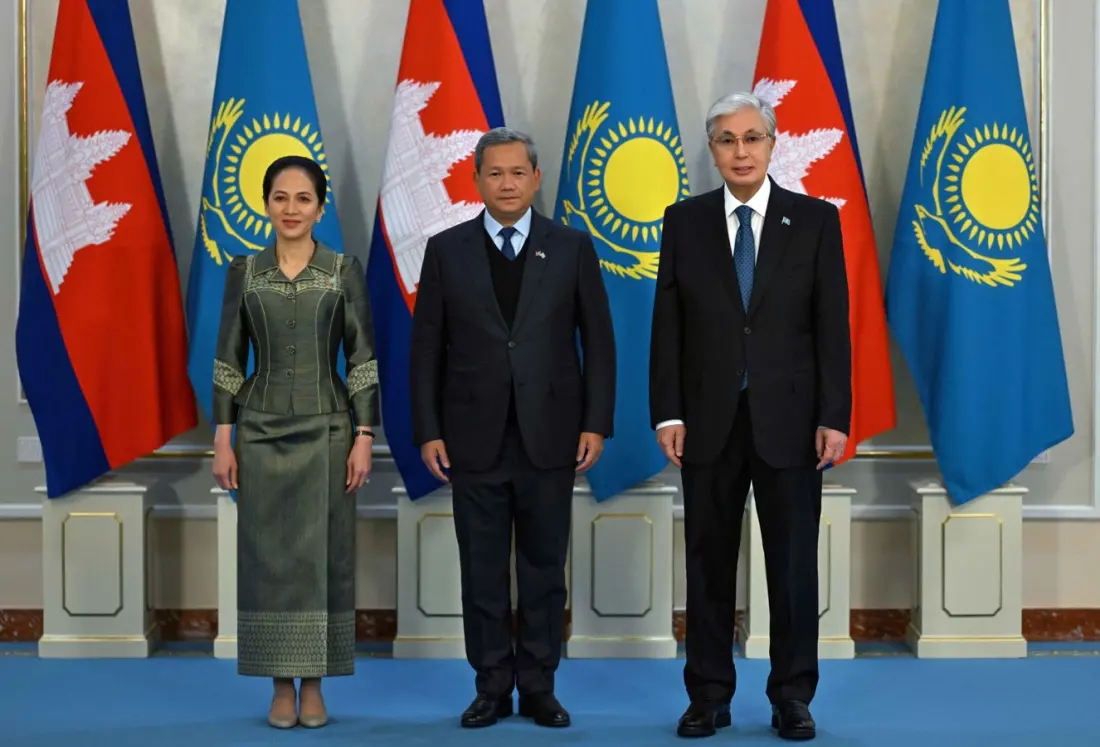
A chance of easier travel between Central Asia and Southeast Asia is on the table. Cambodian Prime Minister Hun Manet visited Astana on Oct. 17 — the first such visit by a Cambodian premier — and among the headlines was a proposal from Kazakh President Kassym-Jomart Tokayev to establish direct air links between the two countries, explicitly framed as a way to boost tourism and people-to-people exchange.
For now it's an intention rather than a route announcement, but the symbolism matters. The talks produced six memorandums of understanding, including one dedicated to tourism, alongside agreements on artificial intelligence, digital government, trade, and culture and the arts. Astana and Phnom Penh also became sister cities, the kind of arrangement that often precedes cultural exchanges and familiarisation trips.
Why would Kazakhstanis want to fly to Cambodia? Tokayev answered that himself, saying many Kazakh people would like to visit Cambodia and discover its attractions. Cambodia's draw is obvious: Angkor Wat and the temple complexes of Siem Reap, the riverside capital Phnom Penh, and beach destinations such as Sihanoukville and the islands of Koh Rong and Koh Rong Samloem. Kazakhstan, for its part, offers Cambodian travellers a very different proposition — the steppe and mountain scenery around Almaty, the futuristic architecture of Astana, and a visa regime that has been progressively relaxed for Asian markets.
Currently, there is no direct service, so travellers between the two countries connect through hubs like Bangkok, Bangkok Suvarnabhumi, Seoul, Istanbul or Dubai. If negotiations progress, a nonstop route — likely via Air Astana or a Cambodian carrier — would shave hours off the journey and could open up organised tour flows in both directions.
The wider context is two countries celebrating 32 years of diplomatic relations and looking to deepen trade, agriculture, energy and digital cooperation. Hun Manet also pointed to a humanitarian link that already exists: more than 120 Cambodian students have studied in Kazakhstan, and several now hold senior government posts, including provincial governorships. That existing familiarity gives the tourism push a foundation that many new bilateral agreements lack.
Neither side has given a timeline, and airlines have not confirmed anything. Travellers should treat this as an early signal rather than a booking opportunity — but a signal worth watching. When two governments sign a tourism MoU and float direct flights at the same time, route talks usually follow.
In the meantime, if you're set on the trip, the standard connection options still work well: fly from Almaty or Astana to Bangkok or Seoul, then onward to Phnom Penh or Siem Reap. Total travel time is roughly 12–16 hours with a layover.
Story via The Astana Times.