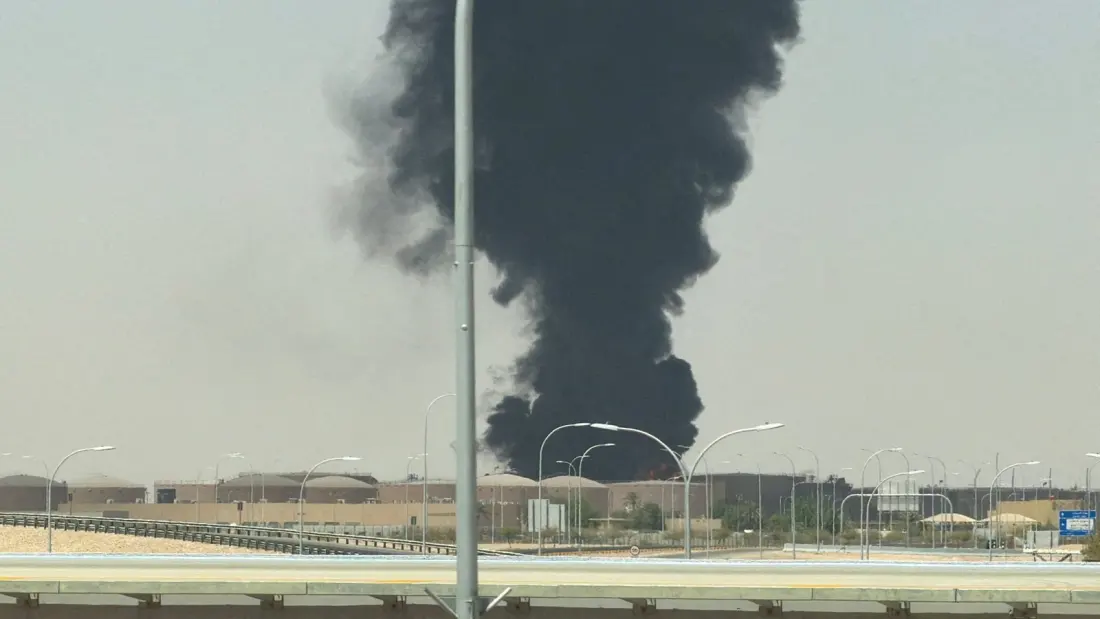
Riyadh woke to air raid sirens in the early hours of Saturday as a Houthi ballistic missile targeted the Saudi capital for the first time since Yemen's civil war flared back up. Residents got a text message just before 3 a.m. telling them to stay indoors because the area was under hostile aerial threat. Around 30 minutes later, two loud explosions were heard across parts of the city, and a burning fuel tank bearing the Aramco logo was seen near the airport. The Saudi-led coalition said the missile was intercepted, but the message to anyone thinking of visiting the kingdom is hard to miss.
The strike on Riyadh is only part of the picture. The Houthis, who are backed by Iran, say they also hit Aramco facilities in Yanbu, a key oil export port on the Red Sea. Riyadh has accused the group of targeting Mecca earlier in the week, an attack the Houthis deny. Saudi Arabia has responded with scores of airstrikes on Houthi-held territory, though it hasn't slowed the group's advance. In recent weeks the Houthis have seized Yemen's entire Red Sea coastline, including control of the Bab el-Mandeb Strait, one of the world's most important shipping chokepoints. The UN says more than 110,000 people have been displaced.
The US response underlines how seriously this is being taken. President Trump cut short a weekend at Camp David to return to the White House, and the State Department warned the conflict could "escalate rapidly", urging Americans to seriously reconsider travel to and through the region. Washington also refused a Saudi request to strike the Houthis, according to Axios, even as it approved a $24.3 billion sale of 48 F-35 jets to the kingdom.
For travellers, the practical fallout is immediate. Saudi Arabia is the world's leading crude supplier, and the fighting has already disrupted oil exports and maritime traffic, which could push up fuel costs and affect flight prices more broadly. Airlines may reroute or cancel flights to Saudi airspace at short notice, and the situation around Red Sea shipping has knock-on effects for cruise itineraries in the region. Anyone with trips booked to Riyadh, Jeddah or Mecca, particularly for Umrah pilgrimages, should check their government's latest travel advisories and their airline's change policies. The truce that had held since 2022 collapsed in July, and with both sides digging in, there's no clear sign of de-escalation.
If your travel plans touch the Middle East in the coming months, keep an eye on official guidance rather than booking on optimism. This is a fast-moving conflict, and the regions near Yemen's coast and Saudi Arabia's Red Sea ports are the most exposed. Note this report is credited to Daily Sabah.